Monday, April 6, 2009

Bioshock

Bioshock is one of my favourite newer games, and is probably one of the best examples of superb narrative art, and interactive art. If you have not played Bioshock yet, I am warning you that I completely spoil the game here. It is important to discuss the ending in order to fully understand what makes Bioshock so amazing.

Atlas Shrugged Part 2: Underwater Adventure

I cannot talk about Bioshock without mentioning Ayn Rand's novel, Atlas Shrugged. I admit to never actually reading the original novel but from taking some political science and English courses throughout university I have a passing knowledge of the subject matter in the book, enough that I understand the link between this book and the game. Ayn Rand was very conservative and right-winged. She argued for limited government and personal freedom. Atlas Shrugged was about the decline of Western Civilization as she saw it happening and she used a work of fiction to promote her own philosophy.
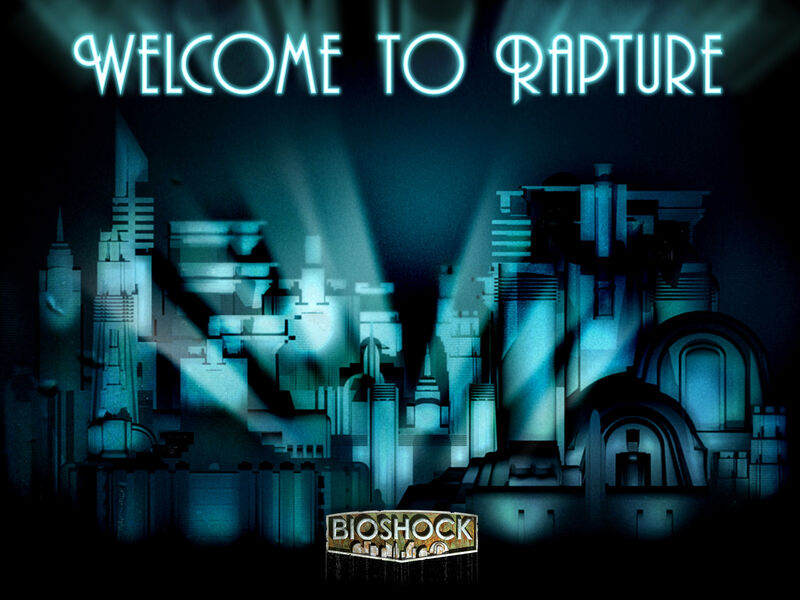
The game Bioshock is set in an underwater society gone wrong, called Rapture. The society was created by business man Andrew Ryan. Andrew Ryan is obviously a stand in for Ayn Rand. In essense Andrew Ryan created Rapture similar to how Ayn Rand would have created her own society. In Atlus Shrugged some of the main antagonists are categorized into "looters" and "moochers." Looters are people, sometimes the government, who confiscate earnings at the point of a gun. The looters are a very thinnly vieled disguse for tax collectors. Ayn Rand was not a fan of taxes or having to answer to the government. In the game Andrew Ryan creates Rapture in part to get away from the American tax system. Moochers, in Atlus Shrugged, are people who demanded earnings because they could not work for themselves. The moochers are supposed to be the poor and those on welfare. Ayn Rand was a big believer in earning your own keep in life and individual power, she was not an advocate for charity. Moochers are seen as parasites who suck the life out of society. In Bioshock, moochers are non-exsistent, because they are not allowed in Rapture. Rapture is a society built on the best and the brightest.

You are greeted in Rapture by this image. It sets the tone for the dark and mysterious game as well as give the player cues toward Ayn Rand's Philosophies.

Rapture was supposed to be Andrew Ryan's (Ayn Rand's) perfect society. However, the lead designer, Ken Levine, was not a big believer in Ayn's philosphies and uses Bioshock to poke holes in her beliefs, showing that her idea of utopia is actually more of a dystopia. It was a bold move for Levine to incorporate this layer of symbolism in his game. Doing this is not as common practice as it should be, and it brought his story to a new level of sophistication. Rapture completely failed and all the inhabitants became mad with power. The best and the brightest were in ever lasting competition with each other rather then working together. Instead of a group mentality, the indivdualism turned into selfish behavior (Ayn Rand wrote a series of essays entitled The Virtue of Selfishness). The moral values of everyone on Rapture were completely lost. The people were so self involved that they became addicted to modifying their bodies to constantly improve. Rapture is a violent and chaotic place when you start the game.

Moral Choice in the Game

Throughout the game your character gained power after beating the "boss" characters called "Big Daddy." Big Daddies protected "little sisters." The little sisters contained ADAM which is what you needed to become more powerful and progress through the game. You could either rescue the little sister by recovering a small amount of ADAM and letting the girl live, or havesting a great deal of ADAM and killing the girl. The choice is up to the player as you held the little girl in your hands. Personally I could never bring myself to kill the little sisters. Ken Levine wanted a moral choice in the game that was tough to make and would get a real emotional reaction from the player. In most games you gain experience from killing monsters in self defense. In this game you gain the most experience by killing helpless children (if you do only save children you are rewarded with a bigger bonus in the end but this is not immediately apparent). The little sister squirms and yells "no no no" when you have her in your arms. They are portaryed as monsters beyond saving but you can make it your mission to do so. It's hard to think of another game where it actually bothered me too much to kill a character.

Lack of choice

I have talked about interaction and how we have control over the games we play. However, in the end most games have a clear end-game. Sure you can play around all day in level 1 in a game but you will never reach level 2 that way. Bioshock has a series of missions which are given to you through radio transmission from a charater named Atlus (yet another link to the novel). Atlus always asks you to do something by saying "Would you kindly..." For example if he wanted you to get into Area 2 he would say "would you Kindly get to Area 2." The whole time the player takes his orders and follows through with them. Near the end of the game you find out that you were actually created on Rapture and you were brainwashed to do anything when someone says, "would you kindly." Atlas turns out to be the real evil mastermind (even though Andrew Ryan is still seen as evil) and is really a criminal named Frank Fontaine (a reference to The Fountain Head another Rand novel). When you take a step back and look at the whole "would you kindly..." trigger, you see how it isn't just the character Jack who is brainwashed but you, the player. You complete all the missions, even though Jack is your avatar, you are the one in control. The moment you find out your character is brainwashed, is the moment you find out your brainwashed, it completly breaks the fourth wall. It not only makes an important statement in the game but makes a statement about the entire video game art form. We might be controllers of someone elses vision, but we are still controlled by the scope of the game.

Bioshock contects to the player like no other game in two distinct ways. The uncomfort the player feels when faced with the choice of whether or not to kill a child, and learning that they have no other choices in this game, or really in any other game. This game really displays the power that vide games can have as an artform.

Thursday, April 2, 2009

Colours - Green

Kermit the Frog had it all wrong, it is very easy being green. The most common attributes of the colour green are safety and nature. The colour green is a "calm" colour that welcomes people and is easy on the eyes. Whether there is some "magical" attribute to green or its a learned subconcious reaction doesn't matter, the fact remains that we see green in a specific way. We colour traffic lights green to let people know its safe to go. Green is the most common colour in nature (if you don't include the blue sky) so its only natural that we feel comfortable with this colour. With the large environmental movement people have been successfully using the colour "green" to sell their "green" products and start "green" collar jobs. That's how green is seen in daily life but how does it work in games?

Getting Started

I mentioned that green is a safe colour. Just like a traffic light means "GO" many games start off with a "green" level to ease the player in. Take a look at these examples:

Sonic Green Hill Zone
(first level in the first Sonic game)


Little Big Planet Garden
(This game is fairly different from most games even in its genre, it starts off in a simple garden)

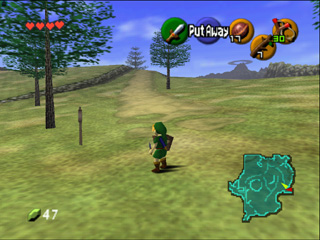
The Legend of Zelda: Ocarnia of Time
(The first 3d Zelda game opens up in a happy green village, Kokiri Forrest)


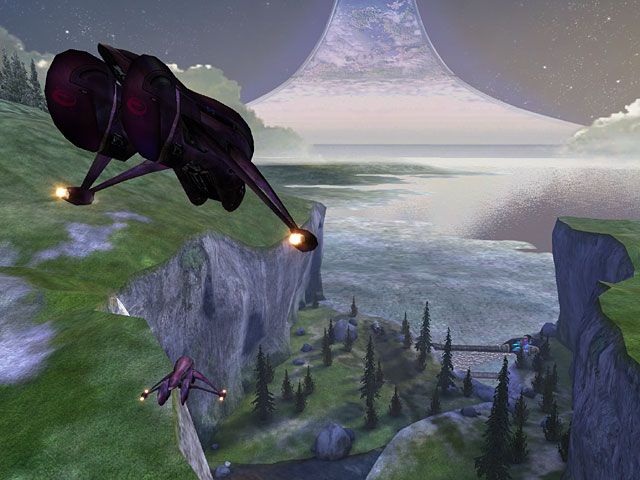
Halo: Combat Evolved
(Second level in the game but the first real open long level)

Of course not all games start off green but many do. Even if the first level isn't green at least one of the earlier levels are. Its very common to start a game in a forest themed level. The imagery of nature not only uses this colour but since it is set in a recognizable setting the player feels more at home. Many people have been to a forest but not many people have gone through lava or a dangerous tundra. Thats why the lava levels and ice levels usually appear later in a game. It all goes back to that basic instinct, "Green Means Go." If you start a game in a red firey level you are telling the player that this game is going to punish you from the get go. Starting the game with an easy green level lets the player get accustomed to the game before moving on to the harder stuff.

The HUB

Many open world games (games without real level progression) cannot directly lead a player level by level. So most of these games have the hub area, an open space you adventure across to access different parts of the game. These hubs are almost always green. Hub levels need to be safe and welcoming. The player needs a break from the harder parts of the game and moving across the green hub can let them calm down and recollect. Here are some examples of how the green hub helps this way:

Zelda Hyrule field
(There are some enemies on the field but they are very easy. Transversing Hyrule field is a much needed break from the difficult dungeons).


Oblivion
(The game starts in a dark dungeon but after that short intro you walk out and are welcomed by green. Most of the hard battles are done in dark caves of eerie dungeons. Every time you finish those parts of the game it is a nice break to enjoy the open world.)


Final Fantasy
This is one example but basically every RPG's world map is full of vast open green fields. There are some random encounters on the world map but they are never as difficult as those found in the dungeons.

Shadow of the Colossus
This game is mostly about riding your horse through open nature. You go through these forests and fields in order to find the giant bosses. These fields are the only completely safe parts of the game.


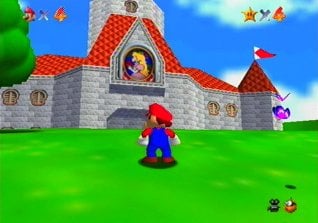
Super Mario 64
When this game came out it was the first of its kind. No one had really made a 3D platformer of this magnitude. The player had to get used to a completely different control system. The game started off in a safe castle garden for you to learn in.

That is what the colour green means to video games and how it contributes to the visual aspects of the art. Green is the quintessential safe colour, and can easily welcome players into the video games world. These are the main reasons my blog's is colour scheme is based on green.

Tuesday, March 31, 2009

Super Mario Bros

The first game I am going to examine is Super Mario Bros. I chose this game first because I know basically everyone, non-gamers and gamers alike, have at least a passing knowledge of it. Even people who do not own a video game console still recognize Mario and can maybe even hum the theme song.


Origin of Mario

Super Mario Bros. is not the first game to feature Mario. He notably appeared for the first time in the Donkey Kong arcade game. He was originally called "jumpman". His name changed to Mario when the Nintendo of America crew noticed that he looked similiar to their Italian landlord Mario Segali. Mario earned his trademark look from his primitive arcade graphical capabilites. Shigeru Miyamoto (creater of Mario) wanted to work around the blocky pixels in order to make a realistic looking human. Mario was given a mustach in order to outline the fact he had a nose, without the classic mustach his nose would look more like a pixelated tumour portruding from his face. He had overalls on so they could animate arm movements. If the character had one uniform colour for his clothes his arms would blend into the body. Finally Mario aquired the trademark hat because hair was too difficult (and most likely impossible) to animate. Rather than having a stiff looking block of brown on top of Mario's head to resemble hair, a hat was put on therefore removing that animation hurdle. Mario was born out of the need for attractive visual art on a primitive arcade cabinent. And it worked! Mario's look has basically remained unchanged since 1981.

Art Design of Super Mario Bros

Even though Super Mario Bros was on new techonology that seemed advanced at the time, the artistic direction was aware of its limitations. Many Nintendo games looked dated when seen today. But, Super Mario Bros played with the system's strengths and created a game that still is visually appealing today. I already discussed how Mario (and coincidently Luigi) used simplicity to create an icon, but nearly every character in the game looks just as polished as in 1985. The main enemies in the game were all simple and to the point. They all were small with easy to identify real world counter parts.

The levels were also very colourful. On top of that each level had a different colour scheme from the last. Most games at the time had one singular art direction throughout the game. Super Mario Bros though, changed the way the game looked in each level and only recycling backrounds a quarter of the time.

Level 1-1. The intro level. It's basic and has an easy design. The colors are brighter and more cheerful.

Level 1-2. The first underground level. It immediately changes the tone of the game. It goes from bright and cheerful to dark and mysterious.

Level 2-2. The first water level. These levels remove Mario's basic gameplay, jumping. It changes the way you play the game.

Bowser's castle levels are some of the most difficult in the game. The game changes from shades of blue, green and brown as its main colors, to red, black, and grey.

A new level of interaction

Items were hidden all over the place, and Mario Bros was one of the first games that seemed linear but encouraged exploration. All the hidden secrets in the game led to the players immersion in the game. It was easy to get lost in Mushroom Kingdom when you had more to explore and discover then in most other games. The level design also made the world seem more alive. A game that just has simple left to right orientation seems limited as if there is nothing but a void above and below. Super Mario broke this trend by offering players the ability to go underground via pipes, climb bean stalks and run around on the clouds, and even use warp pipes to skip entire sections of the game. It may seem like nothing now but everything mentioned was groundbreaking at the time.

Super Mario had another thing that very few games had at the time, physics. The physics didn't match the real world but there was still a fluidity to the movements in the game. Mario didnt just jump straight up and down he had momentum. His walk also could smoothy turn into a run. Turtle shells could be kicked and bounce around the level. It was simple and intuitive. Mario and his surroundings reacted the way we expected them to. Before this it was normal for jumping in games to feel stiff and out of control. Now the original Super Mario Bros stands the test of time in its playablity, and some current games do not even control as well. This game set the bar in control and it has stayed there since.

The music we now all know

Finally I have to mention the music. Most early games had one song that usually played through the entire game. Super Mario Bros had many songs, one to go with each sub-level. This technique was not unheard of but Super Mario Bros had some of the best composed music at the time.


The game starts with the tune we all know, an upbeat bouncy beat that goes with the rythym of the player. The coins you collect and the blocks you break add to the overall score. That first song is welcoming and fun.


Next Mario goes underground, the song changes drastically. It is now lower and has kind of an echo to it. It fits perfectly with the underground levels since the music sounds a bit more cautious and overall darker.


Then we have the water levels. This song returns back to the fun that the original tune had but is a bit slower and the notes flow together. This song is perfect for swimming. It sounds aquatic and the music progresses as slowly as you move through the water.


Bowser's castle music is almost a 180 from the previous songs. The beat is very fast and almost frightening. it is a bit more action oriented then the other songs. It lets the player know the climax of the level is here. The music also goes with the sounds of fire in the level. When bowser is blowing his fireballs at you they time perfectly with the music.


The last song(s) is/are not level specific at all. It is the quick pace the music picks up when the players time is running out. I explained this effect in my first post, but I will reiterate it. The music changes from fun and welcoming into a panic. Nothing makes the situation more tense and nerve racking then hearing the "times almost up" tune.

Super Mario Bros is one of the earliest representations of video games as an art form. Games before it were more about high scores and competition. Super Mario Bros was a labour of love and was created as an experience above being just a game. Never before was there a game that had such a unique look, sound, and interactivity to it. Sure the story line was simple but it was the point. The cliched plot of "save the princess from the monster" only helps it entrench itself into the fantasy realm. There may have been side-scrolling adventure before this game but it was Super Mario Bros who prefected the genre. Every game in this genre uses Super Mario as a blue print. You can even see the influence this game has today.

Monday, March 16, 2009

Art of Gaming 101 - Basic overview

I started this blog in response to the lack of gaming websites that fully tackle video games as an art form. Most main websites have had the passing article about the topic, but for the most part they either glance over the issue or hit all the wrong details. This is expected since video games are a very new art form and many people don't know how to react to it yet.

Do I claim to have all the answers? No. I just want an open forum/blog that will focus on video games as an art form and how to explore it as such.

One of the first issues many people come across when looking at video games as art is they do not know what angle to critique at. Some only look at the story in a game and dismiss it as too shallow to be considered art. Some cling to games that are visually appealing and focus on the visual art. Other's spend a great deal of time and energy on the music in games. There really is not a problem with these responses to gaming as art but I think they all just haves pieces of the puzzle. The big picture is that all of the things I have mentioned contribute to the artform (and more). Personally this is how I break down the art of gaming.

Story (narrative art)

Video games have long been bogged down with critisism as either having shallow storylines or being overly complex and unrealistic . It is true that if you look at 99% of video game storylines on their own (seperated from the rest of the game) you will find that the narrative is lacking. However, this is just part of the game and functions as one piece of the whole. Sure, a really bad storyline can hinder a players interest in a game, but it all depends on what that game is. Super Mario has an exteremly simple and bland story line on it's own (princess captured, needs saving) but as a whole it is part of a perfect game. Video games are not books. Books rely 100% on the narrative, without a good story a book is no longer literature it is just trash. But games can use a simple story as a catalyst for the rest of the game.

Do not get me wrong some games have fantastic stories and you can tell the people involved cared deeply about the plot, characters, and symbolism in the game. An RPG of any variety must have a good storyline in order to succeed. The battle system could be perfect, the graphics could be stunning but if the narrative falls flat the whole house of cards fall down. The game designers have to make a choice on how important the narrative of their game is. But do not mistake a shallow narrative as a hit against the video game art form because there are many other important factors.

  
In the Metal Gear Solid series you watch the story unfold more than you play.

Visual Art

One of the first thing that catches anyones attention is the graphics of a game. Companies live and die by showcasing what their games can do. Unlike narrative art every game must be visually appealing. Cutting edge high definition graphics might help some games but it is a mistake not to consider other visual art directions as artistic. Sure some Playstation 3 and Xbox 360 games may look extremely appealing but that does not make it any more artistic then Super Mario Bros. It the same way a realistic portrait can be just as artistic as a piece of abstract art.

It is important to keep in mind that is a mistake to judge a game as artistic just by its visual style. A game could look gorguous but if it doesn't play well the visuals can't hold up the game. Visual art is just another piece of the entire video game art form. Some games do rely more on visual art then others to convey their message but overall the game just has to look appealing to succeed.

Even still pictures of Okami look like pieces of art.


Music

Video Game music has come a long way. Full live ochrastras currently tour playing video game music, and a number of rock bands produce their own interpretations of video game music. Unlike visual art and narrative art, music can stand on its own away from the game. In japan it is not uncommon to find many video game soundtracks for sale. I would still argue that even though video game music can stand on its own as art, it must first have been tied to a game that had a connection to the listener. Sure, video game music can be finely composed but it is its original tie to the video game that matters most.

More than just sounding good, music can also set the mood for a game. Everyone knows the Super Mario Bros theme. The music is fun and light hearted, and it complements the gameplay. When your time is running out though, the music turns into a fast paced frantic. This music alerts the player to move with the beat of the music or he/she will lose. Anyone who has played a game that knows, once hearing the music change, they will immediatly find their hands tightening around the controller and mind racing. It is not the time ticking down that bothers the player but the frantic music. In some games the music changes during battles into a harder tune to gear the player toward the fight at hand. Video game music affect the way we play.


Rez is a music game where the soundtrack unfold as you progress

Interactive Art

Finally we have the thing that ties all the previous art forms together, interactivity. Video games wouldn't be what they are without interaction from the player. Some games allow the player to manipulate and change a great deal over the course of the game, while others set the player on a linear path with one clear goal. Even in this diverse spectrum, interactivity plays an important role. If you are playing a simple platformer like Super Mario Bros, that only allows you to go left to right, you still have control over a piece of the game. You can choose which enemies to hit, what blocks to break, and what coins to collect. The way you play a game, no matter how strict the guidlines are, will always be at least a little bit different for another player's experience. This is where the real magic of video games comes in. It is through interaction that we connect to the game, we are happy when we accomplish a goal, frustrated when we can't get past a certain area, and a whole range of emotions in between. Even though we know that we are just playing a game on a TV screen we can still get lost in the moment - like in a good book, or movie.

Sometimes interaction goes beyond just trying to help your character accomplish set goals. Currently it is a trend in gaming to allow the player to change more of the game. Expansive RPGs have many optional side quests that the player can ignore or join in to gain rewards, adventure titles now play with your morals allowing you to make decisions that will change how the rest of the game world looks at you, and some games let you build and create entirely knew set pieces and scenarios from scratch. Interactive art is the most essential piece of the video game art form. The earliest games which couldn't realistically represent impressive visuals, or have any music, and lacked a narrative completely still thrived with interaction. Pong had no visuals besides two white paddles and a ball, no sound but a slight ping when the ball hit a paddle, and no narrative whatsoever, but it had intuitive interaction and that is all it needed to be a hit. On the flip side something with beautiful visuals, amazing story, intrancing music but no interaction is not a game at all.


Little Big Planet lets players use all the tools in the game to create their own new experiences

Well that is my long winded intro to this blog. I can promise I will not always write at such lengths. I just wanted to let you know how I will be looking at video games as an art form. Currently I have plans for looking at classics along with newer titles as pieces of art, along with "feature pieces" focusing on certain game design choices (music, colour, level design, etc).

Please leave a comment and input.