Super Nintendo (SNES)
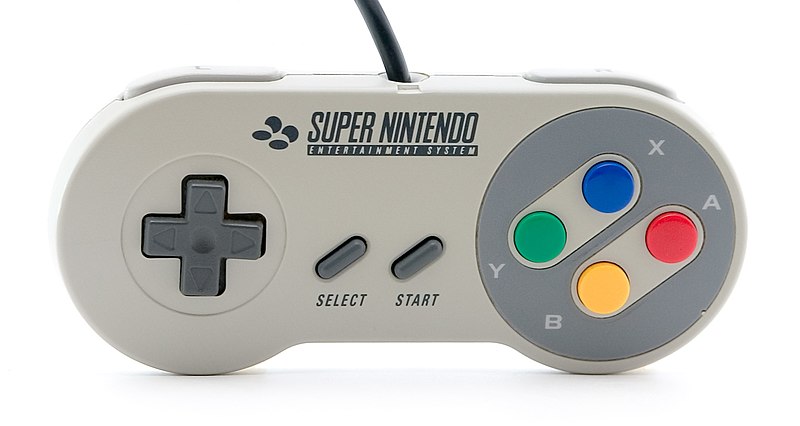 In 1990, Nintendo finally came out with a new system, and with it a better controller. Early systems (namely the Intellivision and Colecovision) had many buttons on the controller but they were placed in such a way it was very difficult to take full advantage of them. This is why the NES controller and later the Sega Genesis controller were such hits, they had minimal buttons and all were easy to use. The SNES had four buttons that could be reached with the right thumb. Since games were becoming more complex it was difficult to map a game on just 2 to 3 buttons and these 4 buttons gave developers a lot more action to play with. Furthermore fighting games were becoming more popular in the early 90s and controllers needed at least 6 buttons to mimick the arcade. Nintendo knew that 6 buttons all located for the right thumb would be too much to handle. So the additional two buttons were placed on top of the controller. It felt natural to hold the controller with a thumb on the d-pad a thumb over the A,B,X,Y buttons and the pointer fingers resting on top of the controller against the L and R buttons. Now the player could quickly locate and use 6 buttons and fully control the directional pad with no issues. It lead to faster and more complex games. The player now had the tools to move the artform forward.
Game Types - With more buttons on the controller and all of them being very easy to access games got even more complex and fast. The SNES could handle all the genres that the Genisis and the NES had but with an added layer of gameplay. This controller also allowed fighting games to be successfully ported over to the console. "Street Fighter 2" being an example of what the console and the controller could handle.
Sega Genesis (6 button)
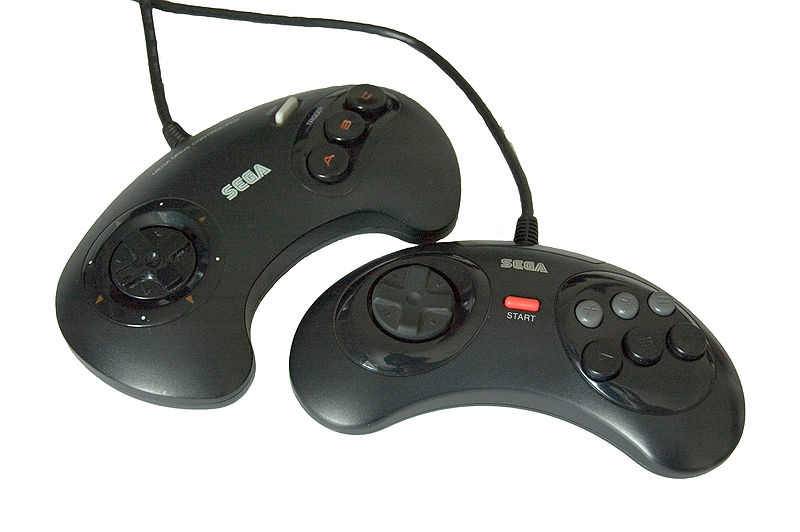 Pictured left is the old controller and on the right is the new 6 button controller.
In 1993 many games were being mapped to the Super Nintendo's 6 button layout making them difficult to convert over to the Genesis. Sega had to create a new controller to keep up with game design. So they added 3 new buttons to the controller. Rather than copying the SNES and placing 2 of the buttons on top of the controller, they placed all 6 buttons for the right thumb. The controls were managable but not as easy to use as the Super Nintendo. The 6 buttons covered too much space and it was difficult to use all of them effectively. It was a step in the right direction and cemented the fact that games now needed 6 buttons, but the controller was a little too awkward.
Game types - The original Genisis controller could handle many genres but was not so good at fighting games. Fighting games on the SNES had better controls soley because it had the number of buttons needed for the arcade port. The 6 button Genisis controller allowed the consoles library to open itself to more games.
Sega Saturn
 Not much is to be said about the first Sega Saturn controller. It copied the 6 button Genesis controller but it had shoulder buttons, like the SNES, as well. But the hardware itself was a bit too clunky and the buttons felt stiff. It was hated by most gamers and the Sega Saturn was a failure in the marketplace. Sure there were many factors that led to the Saturn's problems but the controller didn't help. It just goes to show that if a controller is uncomfortable and not well liked it is hard to get people to use it and developers to create games for it. The Sega Saturn was also rushed to market in 1994 and this controller is proof that more time could have been spent polishing.
 In 1996, Sega released a new controller featuring an analog stick. While the stick was a welcome change (and an answer to the N64 controller mentioned below) it suffered from being way too big and awkward to hold. The circular controller fit in no ones hands properly. The other thing it got right was the new shoulder triggers. Rather than a pair of stiff buttons on top of the controller it had triggers. These triggers were much easier to use and had depth to them mimicking a gun trigger. It was a simple and welcome change but sadly it did not become standard on all controllers until much later.
Game types - The Saturn was never ment to be a 3D machine and was marketed as more as the ultimate 2D game console. This also showed in the controller which worked fine for 2D games but fell apart for 3D games. The 3D games that did succeed on the Saturn, usually limited the controls. In the case of the remarkable "panzer Dragoon" games they were made on rail shooters thus not having as much 3D movement. When the newer 3D controller came out it allowed for more 3D control but it was a little to late since the Saturn was almost on the way out.
Playstation (original controller) Coming out just a month later than the Saturn in Japan the Playstation knew exactly what to do right. The system was originally going to be a Super Nintendo CD add-on and it shows with the controller. The Playstation controller was a simple upgrade to the SNES one (if it is not broke don't fix it). All that was added was grips to hold it more comfortably and two extra shoulder buttons, now giving the player 8 action buttons to work with. Since this remote, 8 buttons has become the standard, it is just enough to give the game designers enough to make their games complex while keeping it managable for the player to work with.
Game Types - The Playstation really pushed 3D games and it worked well enough on its first controller. The D-Pad worked but didn't give full 3D movement. 3D games felt a little clunky on the original controller. However the extra shoulder buttons did allow for more complex games in every genre.
Nintendo 64 In 1996, Nintendo tried to reinvent the controller again. They did a lot of things right but also quite a few things wrong. The main addition to the controller was an analog stick giving the player full 360 degrees of movement. 3D games were becoming the norm and the best way to manipulate a 3D environment is with a controller that lets you move in all directions smoothly. The analog stick worked perfectly and it has become a standard addition to every controller since. Nintendo took steps backward by placing 6 buttons for the right thumb, which was already proven to be too much. The d-pad was still on the controller but it was placed in such a way you could not use the d-pad and the analog stick at the same time (which was needed for some games, one set of controls to move another set of controls for the camera). 4 of the buttons on the right side became the new camera buttons but they cannot mimic the precision that the d-pad would have had. Also turning 4 buttons into camera buttons ment that now only 4 buttons could be used for action. It also had the weird placement of 3 shoulder buttons (on on the left shoulder, one on the right shoulder, and one in the middle). Even though there were 3 buttons you could only comfortably use 2 at the same time thus restricting the player. It was a revolutionary controller that changed the way game designers created games in some ways but also a lesson on what not to do for others.
There is one addition to the N64 controller that came out in 1997. The Rumble Pack allowed the controller to have force feedback. You could literally feel the action in the game through the controller. It was an immediate success and developers loved it. It is one of the biggest advances in bringing the player into the game world to date.
Game types - With the analog stick the N64 execelled at one thing above the Playstation, 3D platformers. The N64 controller just handled a 3D environment so much better then any other console when it came out. But the limited buttons and the akward placement did not allow for as complex games as the Playstation had, and fighting games were few and far between and controlled horribly. The controller was created specifically to control "Super Mario 64" so it worked best with games that were similiar to it. It also pulled off first person shooters successfully but still not as great as it the PC could.
Dual Shock
 Coming out in late 1997 in Japan, the Dual Shock was Sony's answer to the Nintendo 64 controller (The Dual Analog came out a bit before but it was the Dual Shock that was the true final product. Because the Nintendo 64 controller had an analoge stick it was far easier for game designers to create better 3d platformers and first person shooters. The Dual Shock trumped the N64 controller by having two analog sticks (which is now standard on almost all controllers) which allowed for much more precision in a 3D landscape and tighter controls. It achieved such prefection that the later playstation 2 and 3 controllers were barely changed (The Playstation 2 controller had such a small amount of change it won't be mentioned later in the blog). The Dual Shock also had rumble inside the controller which made games much more realistic and cemented the fact that all games needed rumble support from now on. It became the new standard replacing the SNES controller as the blueprint that all game companies design their games and hardware from.
Game Types - Once the dual shock came out the Playstaion became the king of 3D control. It could do everything the N64 controller could and more since it had better button placement and more buttons. Once this controller became standard complex 3D games started to become the norm.
Dreamcast controller Released on 9/9/99 the Dreamcast controller was matched with a great system but the controller itself had many flaws. Unlike the Playstation controller, the Dreamcast only had two shoulder buttons (that were thankfully triggers). This brought the number of action buttons that designers had to work with down. It also only had one analog stick which was another step back since game designers have already proven the two analog sticks are needed for many action games. It also was rather big and a little awkward to hold. The other major flaw was that the D-pad was placed too far down and was awkward to use.
 Its big claim to fame was the VMU unit in the middle of the controller that promised adding a new layer of gameplay. It was a small little extra memory card/controller/game that allowed the designers to put extra content on the VMU. For example in the Sonic games the VMU became a home to a virtual pet you could take care of. It could have been a lot more but because of the Dreamcast's short life span it never came to full realization.
Game types: As I said before the Dreamcast controller was a step back from the Dual Shock. However, it was not such a disaster like the N64 controller and it could still handle many genres well. The 2K sports games played particularly well on the Dreamcast and "Soul Calibur" was one of the best fighting games out at the time and it controlled perfectly.


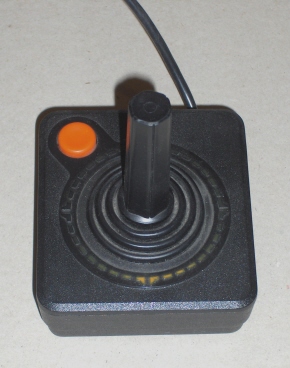
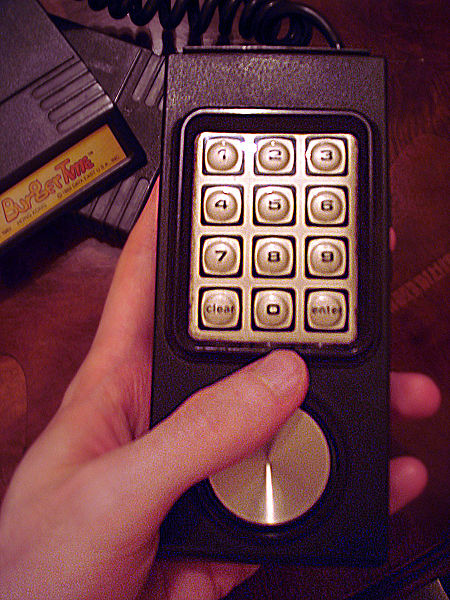
 One unique and fun thing about the controller was the overlays you could put over the keypad. Each game had its own control scheme and many players were not used to using a full keypad for console games. In order to help the player, he/she could use a controller overlay that would tell you which button did what.


 The Japanese Controllers were different in colour scheme as well as having one extra feature. The second controller had a microphone on it. The mic wasn't used in many games (I can only think of one) and all it did was allow the player to project his/her voice on the TV speakers.
