- the juxtaposition of morbid and farcical elements (in writing or drama) to give a disturbing effect


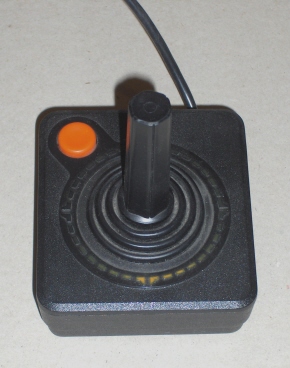
It was 5 years later in 1977 that any big change came to the home console market. The Atari 2600 was a big success and one of the things that helped it was the controller. Arcade gaming was still popular in the late 70s and early 80s and most of these games featured a joystick and a few buttons. Atari brought the joystick into the home which many gamers were already used to. Since the control was so similiar to the arcade it was easier to bring the arcade experience home. Controlling with the stick was much easier than using dials. It felt a lot more natural and offered the player more control over the content in the game. The Atari controller also placed a small red fire button on the controller. Having only one button limited the type of games that could be played, but most games at the time were fairly simple anyways. A single fire button was usually sufficiant for most games in the late 70s and early 80s. It seems simple but adding a button brought a lot more depth to the gameplay, you can now not only control the direction of the characters but the actions as well.Game types - Because the controller was so limited with just a joystick and one action button games basically had just a single character to control and it usually could fire something, or jump but not both.
Intellivision
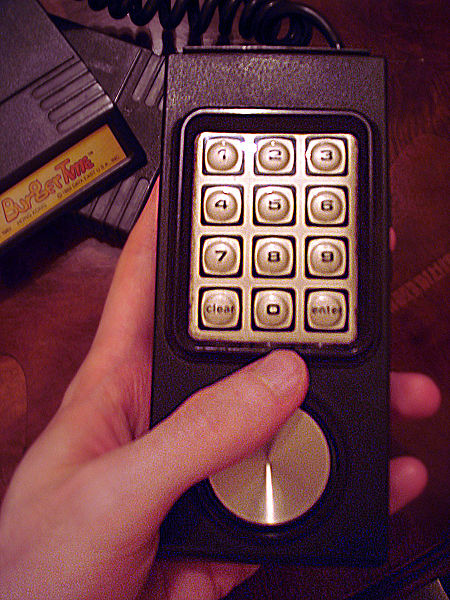
In 1980 the Intellivision hit and with it brought some new controls. Rather than having a joystick, it had a disc that could move in 16 directions. The disc was more advanced than the Atari joystick but because of its design it was not the easiest to manipulate. The controller also has a full keypad and 4 buttons on the side. The side buttons were somewhat difficult to use effectively depending on how you held the controller, while the keypad could only be used when you were not using the control disc. Because you could not manipulate the disc and the keypad at the same time players would sometimes have to use two controllers at once (one for the keys and one for directions). This was not a comfortable situation. The intellivision controller was advanced in many ways (having more buttons allowed for more action on the screen and more control over the game) but had too many hardware issues to truely be amazing.One unique and fun thing about the controller was the overlays you could put over the keypad. Each game had its own control scheme and many players were not used to using a full keypad for console games. In order to help the player, he/she could use a controller overlay that would tell you which button did what.
ColecoVision
Coming out 2 years later than the Intellivision, in 1982, the ColecoVision did a lot of things right with the controller. The control disc was raised and created a hybrid disc/joystick that was much easier to use. Unlike the Atari joystick you could control it with just your thumb and like the Intellivision disc it had a lot more movement. Because you only had to use your thumb it kept the rest of your hand free to press other buttons, allowing more action to happen on the screen. The keypad and overlay was also replicated from the Intellivision. Overall this controller was everything the Intellivision controller could have been if it just spent a bit more time in product testing.
Game types - Both the ColecoVision and the Intellivison were very similar in execution and games because of there similiar controllers. Games now had much more they could do and the overlay allowed for a more complex series of actions the character on the screen could prefrom.
Nintendo Entertainment System
Even though the NES came out in Japan in 1983, under the name Famicom, the controller was basically a copy of Nintendo's Game and Watch, which came out in 1980. The controller was simple as it had only two buttons and a directional pad. The directional pad was where the real change to gaming came from. It was a slightly raised cross but offered precise control. Because it was such a small directional pad it was the first controller that could be held comfortably. It just fit in the player's hand and you could access all the buttons you need with your thumbs. Taking away the complexities of the previous controllers on the market the NES quickly became an accessible and hot selling machine. Even though the controller did not have as many action buttons, because of how easy and comfortable it was to use the games could be faster and more action paced without losing the player. The joysticks and keypads of previous systems were completely scrapped, and to this day all video game controllers are built off of the foundation that the NES controller laid.
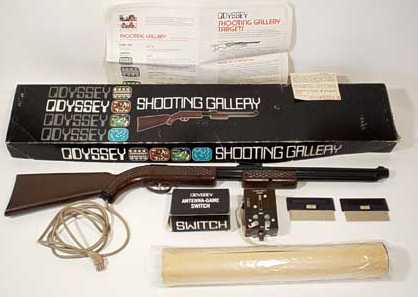
The NES light gun also deserves a mention. It used the same technology the Magnovox one did but it was much lighter and more compact.
The Japanese Controllers were different in colour scheme as well as having one extra feature. The second controller had a microphone on it. The mic wasn't used in many games (I can only think of one) and all it did was allow the player to project his/her voice on the TV speakers.
Finally in 1993 the NES under went a re-design. The controllers were functionally the same but were now curved and felt more comfortable.
Game types - Even though it scalled back on the buttons the games were far superior to those on any console before. With just two action buttons and a control pad the NES could pull off fast action games, racing games, and RPGs with ease. However all these games were fairly simple in design.
Sega Genesis (3 button)
In 1989, Sega released its 3rd major console (the SG-1000, and the Sega master system were the previous two). The Genesis, or Mega Drive as it is called in many other parts of the world, was the first console to really bring in a revolutionary controller. As stated before too many buttons can get a bit too complicated, but the NES had only 2 buttons which limited the amount of actions the player could preform. The Sega Genesis had three buttons all lined up in a row. The player could easily rest his/her thumb in the middle and reach all three buttons. The Sega Genesis was the first 16 bit system and the first to bring truely powerful arcade quality graphics to the home. Because, it was so much more powerful than anything before it, it needed the extra inputs to keep up with how games were evolving. Sega also upgraded the D-pad making it multidirectional. Rather than having just up, down, left, and, right it also included the diagonals. This added a greater deal of control over the characters on the screen while remaining compact and easy to use.Game Types - With an extra action button it added a new layer to the NES controller. It had many similar types of games but they could now preform more actions on the screen. The Genesis controller also allowed one of the earliest Real Time Stradegy games, "Herzog Zwei", to be played

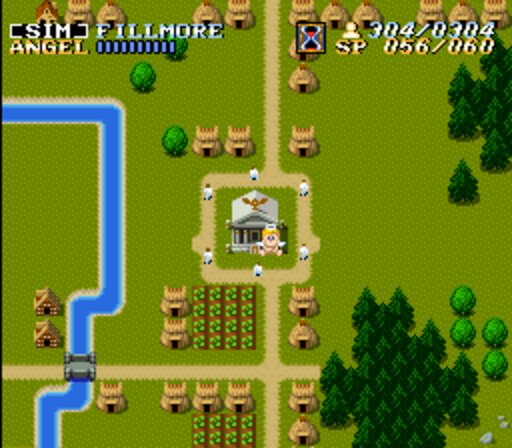
The music in Actraiser matched the action on the screen. The player may have just finished spending a great deal of time building a city and the music helps change the pace of the game.

Religion
*Note* I will be speaking a bit about religion in this post. Do not take my writings here as my particular views on religion. I am simply using the game's plot and story and trying to understand what the creators might have been saying.
In the game you play as "The Master" and his angel looking servant. It does not take a giant leap of thought to figure out "The Master" is God and the angel looking thing is an angel. This game was made in Japan where they do not have a problem playing around with Christain theology since it is not their faith. When brought over to America many Japanese games have most of the Christian symbols and plot referring to it removed. Nintendo was especially picky about this since they did not want to offend anyone. However, Actraiser, does a much worse job of hiding its roots. At no point have the Japanese been blasphamous with their depiction of Christianity, it is just that American companies would rather nothing being said about religion at all.

Backstory
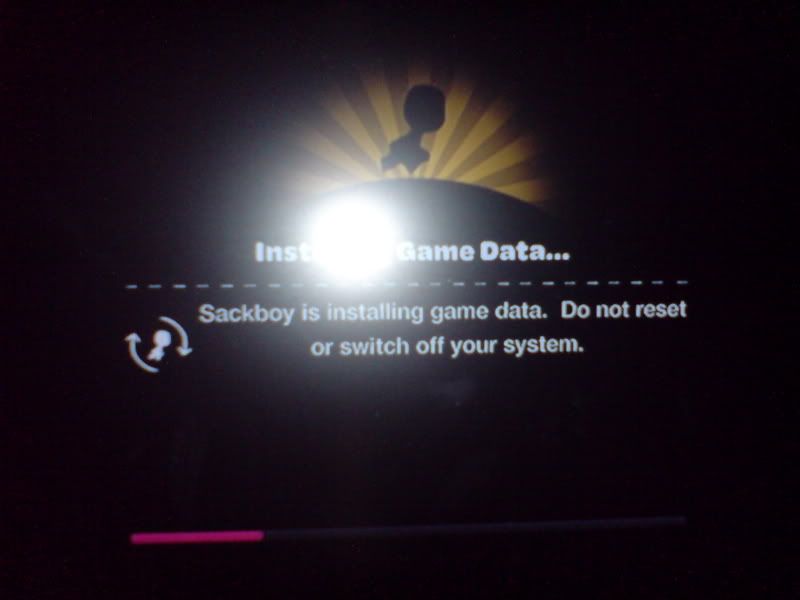
Some loading screens give the player something to read while waiting. It is usually a few sentences (sometimes they change as the loading continues) which fills the player in on the games backstory. This is fairly common place since it takes almost no work from the game designers and is a lot better than a blank loading screen. Things that might not naturally come up during gameplay can be read here.
Hidden Loading
Probably the best kind of loading and one that should be used more often. Rather than taking the player out of the game at all, loading can be hidden within the game. For example say the player needs to get from one level to another. Rather than stopping the game, the levels can be joined by a small tunnel that the player must run across. The tunnel is simple but still fits into the game design. While the player is running across the tunnel the level on the other side is loading. This exact situation is used in the Castlevania games, and during vehicle sequences in Half Life 2.
Castlevania Symphony of the Night was a large game with many diverse sections of the castle to explore freely. Rather than freeze the game between areas, each section of the castle was joined by a tunnel. The time it took to run through the tunnel was the time it took to load the area.
Resident Evil has the best hidden loading out of all the games. Not only did it not take the player out of the game but added to the atmosphere. Resident Evil was a very scary game for its time. The player never knew what was behind a door. The loading screen was replaced by a door slowly opening, or walking down/up stairs adding to the suspense the player felt.
Mass Effect took some criticism by having its loading hidden in elevators. Personally I liked this touch. Not only was the loading more visually appealing (looking at 3d models of your characters) but the elevator played news radio and you could hear how your mission was affecting the world around you. Or like in these clips your characters talked with one another.
Special Mention
There is one final type of loading that is very rarely used. Ridge Racer had the player playing a level of the classic Galaxian while waiting for the game to load. One of the reasons more games do not have a second game during the loading sequence is that it would take too much work. Namco, the developer and publisher of the game, already owned the rights to Galaxian so it took no work to put it in the loading screen. Furthermore Galaxian is a fairly small game and it can be run over top of a loading screen with ease. If a game is too complex, the loading game would need its own loading screen. Not many developers have a back catalogue of simple fast games like Namco and developers do not want to spend time creating their own sub game for the loading screen when work could be better spent elsewhere. However, the Galaxian loading screen is still remembered by many.
Loading is a challange in which the developers must make lemonaid out of their lemons. Anyone can just throw a "now loading..." text on the screen but it takes a little extra thinking and care to turn waiting for the game to load into something more bearable and sometimes a welcome addition to the game.

Time and Mystery: Some items and enemies in these levels are not effected from you rewinding time. The player has to think harder about their new skills and how to manipulate the world around them.
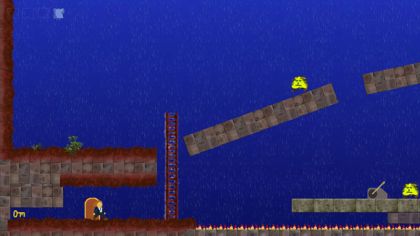
Time and Place: The game world moves as you do. When you go right the game goes forward in time. When you move left the game rewinds. When you are standing the game pauses. Since every step you take effects everything on the screen the whole world becomes a puzzle with the pieces constantly moving.
Time and Decisions: After you perform an action and then rewind time, a shadow version of yourself will play out what you did before rewinding time. These levels have you basically controlling two seprate characters at the same time. Doing so causes the player to really think about every move they make.
Hesitance: (THIS VIDEO SHOWS A LOT MORE THEN THE OTHERS! Do not watch the whole thing if you don't want the puzzles spoiled). This level has a magic ring which slows down time. When the ring is dropped it forms a bubble. The closer to the center of the the bubble the slower time moves. This is the first level that really has the player thinking of the speed of time.
Untitled:(THIS VIDEO SHOWS A LOT MORE THEN THE OTHERS! Do not watch the whole thing if you don't want the puzzles spoiled). This whole world is constantly flowing in reverse. Rather than rewinding time you make time go forward. This level flips the entire game mechanic on its head.
The puzzle solving aspect of the game is one of the most satisfying aspects. Some puzzles can have the player thinking and stuck for hours but once they are figured out the player can pull it off in a matter of seconds. Because the game works the players brain in such a way, the player grows with the character. In reality the character has all the skills already but through the learning of the player, the character has a chance to show off those skills. It is a great experience to figure out a puzzle and gameplay mechanic on your own and then be able to pull it off again and agian with ease.
Art Style
The world of Braid looks like a painting. You can even see the paint brush strokes in the artwork. This meshes video games with visual art. The game looks like a painting come to life. Johnathan Blow is a believer in video games as an art form and it shows. He tied his game to a more respected art form in order to use it as a vehicle to enhance his world. Even the puzzle pieces you gather through the game create paintings that hang in the overworld. The levels are always colourful and fun to look at. Even simple screenshots can capture someones imagination, and this aspect works even better in motion. Furthermore the art direction looks simple but when you look at it more closely you can see all the detail. This mirrors the gameplay and story of braid which on the surface seems simple but in reality is much deeper and complex.

Johnathan Blow isn't soley responsible for the artwork. Johnathan would give a basic outline of the level and puzzle and David Hellman, a famous web comic artist, would draw over it, then together they would polish it. David Hellman used a great deal of symbolism in his art in order to drive the players emotions. When Hellman was explaining the split nature of the game he said, ("In the case of the "parallel realities" world, I represented the theme by combining luxurious domestic objects (nice furniture and fabrics) with rugged outdoor objects (swampy water, rotting piers and nautical rope). The result is incongruous, but intentionally so! Hopefully players will have two simultaneous reactions – "what a nice ottoman" and "what a yucky swamp" – again reiterating the theme of splitting, or staying or going")
You can see what Hellman is saying in this screenshot.
Music
Johnathan Blow took a unique step with not writing his own music. In fact the music in the game was not even created for the game specifically. He instead bought the rights to use licensed music from Magnatune, (an indy record label). He bought songs from the artisits Cheryl Ann Fulton, Shira Kammen and Jami Sieber. Each of the songs are long enough that they avoid any noticable loop. Johnathan Blow also used the music to influence the artwork in the game. Rather than creating a level from scratch and then adding music later, the music came first and the levels were created with the feeling and mood of the soundtrack in mind.
The music in braid is light and sound almost magical, which is fitting considering the way the game plays. This is the first level of the game, where the player does not have to think as hard. The music is very welcoming and fun, which is perfect for getting the player used to the game world.
The final level has a more menacing tone to it. Throughout the game even though the challanges are getting harder the music still stays light. In order to let the player know the end is approaching the music changes into something a bit more dramatic. Even with this change the transition is not jarring and it still maintains the overall feel of the music before.
Story
Side scrollers and puzzle games are not particularly well known for their storylines. Typically they depend on the platforming skills or the puzzle solving to engage the player. In Braid the main focus still is the gameplay and puzzles but there still is a storyline deep within it, and it is so complex that many players have different interpretations of it. The storyline plays through books that you can read before entering a level. You can run right past them if you want and ignore the story and the game isn't hurt by it. But if you read all the books you can get a larger idea of the goal of the game.
An example of the books in Braid. As you can see Johnathan Blow put a lot of effort into his text. The story is never clearly laid out, and it takes a bit more analysis to understand.
The one thing that is clear is you are saving a princess, and there is a past relationship with her that has become strained. The game actually starts at world 2 and goes sequentially up to to world 6. The last level of the game (after world 6) is world 1. In this level you actually see how the game storyline starts. You see your princess and she seems to be running away from a knight. As you go through the level you are overcoming obsticles to meet up with the princess. Once you get to her the game then plays in reverse and you see what really happened. You are not saving the princess, the knight is. You are actually the villain.
The ending to Braid played out. You can see how it originally looks like you are saving the princess when in fact you are trying to capture her.
There is a theory that the overall storyline of Braid is actually about the making of the atomic bomb. The following are clues that support this theory (even though it is in no way the official meaning behind the game:
Again this theory is not supported by Johnathan Blow but it is also not denyed by him. He created the story purposely to get people thinking. It can be a complex allegory for the Atomic Bomb and its destruction, or it could be a story of a man who lost his love through a mistake and wants her back, or it could be a simple platforming puzzle game.
Braid is a game that looks and plays simple but it is far heavier on closer examination. I have only played through the game once and I think it is one of those games that would benefit from a second play through in order to get more pieces of the puzzle that make up Johnathan Blows vision. Like most great forms of art, Braid works on so many levels and can be appreciated on each of them.
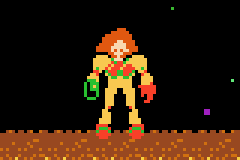
I can't talk about Super Metroid without getting into the original NES game, Metroid. The original game was released in 1986, while the NES was still growing. When the game came out people everywhere were entraced with the game and it quickly became a hit. It played very differently than most games of the day. While it was still a side-scroller it had no level progression. Samus Aran, the hero of the Metroid series, is just dropped into a world and it is up to the player to figure out where to go. The goal of the game was to earn different power ups, each one adding to Samus' techniques allowing her to get through previously blocked areas. People spent hours trying to figure out where they were and where to go next, or would pick up the latest Nintendo Power to get a map of the game. In hindsight, the game was actually a little too confusing, without a map in the game and the basic graphics of the NES it was hard to tell if you were progressing or backtracking. While it was still a major breakthrough in video game design it still needed a bit more polish to become a truely great game.
One of the greatest moments in Metroid, or any other video game, was the ending to the original NES game. When you beat the game Samus takes off her helmet and you find out she is a girl. This moment is not just a cheesy reveal but plays on typical video game cliches. 99% of games are starring male characters, and the games that do star females usually feature her dressed in some pretty pink outfit, or barely wearing anything at all being overly sexualized. Samus Aran is the complete opposite of this. She is dressed in full body armor without a hint of skin appearing. Also Female characters in games follow specific gameplay traits, namely they are fast and weak. Samus Aran isn't particularly fast, and she is anything but weak under all her armor and weapons. The game designers, rather than coming out and telling everyone Samus was a girl, decided to hide the true identity until the end of the game. This was the game designers covering their bases. Games are mostly designed and played by males. It does not take a leap in logic to see that if everyone knew Samus Aran was a girl little boys might not want to pick up the game, and would rather play Contra again. By hiding her true gender until the end, it let players know it is not so bad playing as a strong female.
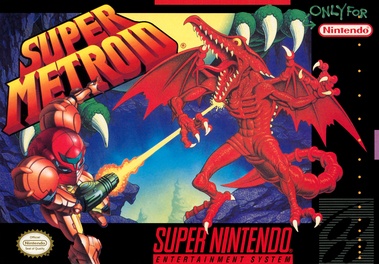
In 1994 Super Metroid came out and it was bascially everything Metroid could have been and more. In many ways Metroid was so far ahead of its time, technology had to catch up to it for it to be fully realized. Super Metroid came out looking better, sounding better, and it had a map so you didn't get lost. Keeping with the tradition of the first game, you are just dropped into a world and its up to the player to figure out how to progress. The newly added map fills in only when you get to an area, or when you get to a map room, which helps keep the game mysterious while not becoming frustrating.
Exploration
I mentioned before how important exploration is to the Metroid series. Much like Zelda the way you level up your character is not gaining experience points, but by finding new weapons and abilities that enhance the gameplay. This not only gives an organic feel to your character growing over time, but adds to the open world game design. One of the major pitfalls, that developers can fall into, is backtracking through older areas. Seeing the same environment over again and fighting the same enemies can get boring. Luckily, the map is designed in such a way that the anytime you have to backtrack you have your new weapons and abilities that change the gameplay of the familiar area. Old areas feel new, and old fighting enemies become easier. The way Samus plays at the beginning of the game is very different from how she plays at the end. The change is so gradual over the game that the player is never overloaded with too much to learn at once. Because of this, there is a sense of pride the player has when they see how much they helped Samus accomplish. This ties the player to the hero in a way that very few games can do, which is why so many people have fond memories playing this game. Being able to connect the player and Samus is a true form of art.
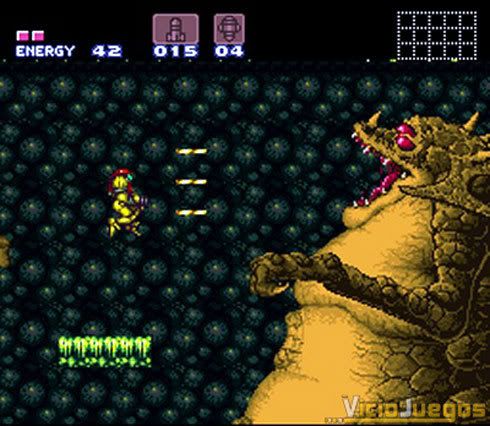
Their are many bosses scattered throughout Super Metroid. They are all much bigger than a normal enemy in the game, and they take a lot more skill to defeat. Usually you can only beat bosses by using your new found powers, along with a mix of convential gameplay. Sometimes it takes as much puzzle solving to beat it as it does to find it. The overall theme of the game is still strong while in the heat of an epic battle. Even when the action on screen looks tense, the only way to beat a boss is with strategy. Some bosses even have multiple ways to beat it, giving each player a different experience. One such boss can be killed with patience and well timed shots, or you can literally sacrifice Samus' health and let the boss capture you and then drag yourself and it into an eletric field. One way is fast, and easy but dangerous, and the other is slow and takes skill. In many ways the bosses are perfect conclusions to each section of the game. The player needs to use everything he/she learned to defeat the boss. There is a sense of accomplishment after defeating the boss that is almost unmatched in most other games.
The Music
Metroid is unique in more ways than just its gameplay. The music for the series is some of the most unique in any video game. Samus Aran looks like a big tough bounty hunter with an array of weapons and you would think the music would reflect that. However, it is too easy and common to simply create an action oriented score. Rather than fall into the typical traps, the composers decidided to emphasize the mysterious atmosphere. Through most of the game the music is creepy, and slow. The musical score of the game has more in common with horror movies than action. Since this game constantly has the player on his/her toes guessing what to do next, the music enhances this mood.