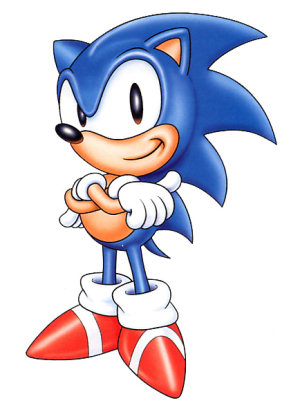
When I wrote about Super Mario Bros I talked about how much of a revolutionary game it was. As a revolutionary new piece of art, Super Mario Bros influenced many games that came out after it. This led to a few memorable games and a lot of mediocre and bad games. A lot of designers just didn't have the talent to build upon the groundwork that Super Mario laid, and created Mario clones that had nothing to say for themselves. Sega was two years into its Genesis console and was still somewhat trying to make a name for itself around the world. Many people still associated games with Nintendo and great platforming with Mario. Sega set out to change this but they couldn't just copy Super Mario. They made a platforming game that was similiar enough to be easily accesible but different enough to feel new and exciting. This is how Sonic the Hedgehog came about and left his mark on the video game industry.
Character Design
Sega had to make a name for itself and it quickly found out that it couldn't just simply copy Nintendo's successes. Nintendo had a certain feel and art style to their games and if Sega tried to emulate it too much it would have been lost in the background. So rather than, playing it safe like Nintendo, they attempted to bring a little attitude and edginess to their console. The new mascot of the company line was Sonic the Hedgehog.
Sonic is a Hedgehog in name only, he bares a very slight resemblence to the real animal. This overly cartooned look has worked great for so many Warner Bros characters (for example the Tazmanian Devil doesn't look to much like the real animal and neither does the road runner), and it was with this school of thought that Sonic was created. They changed the typical colour a hedgehog has from brown to blue (again something Warner Bros does frequently). The colour brown is a fairly earthy looking tone and is used in games in the background and does not stand out (many post apocalytic games use brown to show how degenerated the earth has become) thus it would not be a suitable colour for Sonic. Blue is much like the colour green because it is a softer colour that welcomes the player. Furthermore, when used to colour something that is not typically blue (like a hedgehog) it catches our attention since we know something looks a little odd. Sonic was already a fairly edgy character for its time (something I will get to later) so using a harder colour like red would have overdone it. Blue is the perfect soft colour that balances out the character.
Beyond the gameplay, visual representation of Sonic lays his personality, which was fairly fleshed out for a 2D platformer. Now at this time neither voice nor text was used to have Sonic communicate so his personality had to shine through other aspects. Like a really good silent movie, Sonic showed a lot more about himself through his expressions and movements. Sonic was given slightly downturned eyelids giving him an angrier expression. This is a simple technique any artist can do to change their creations expression (drawn a simple happy face and see how different it looks when you put a pair of down turned eyebrowns over the eyes). Sonic's animation also was laced with his personality. He also moved extremely fast, giving the player the sense that he was controlling something much more powerful than they were used to. His speed was such a part of the character that if you left the controller still for a moment Sonic would turn his head and look at the player, tapping his toe in frustration. Sonic basically called out to the player to be controlled and have fun. Putting both his slightly edgey look together with his speed made Sonic an instant hit with a lot of gamers that were looking for a character that had a unique and fun personality.
Speed
Not only did speed have a lot to do with the character design but also the gameplay. When it first came out it was a sight to behold, watching Sonic clear his way through a section of a level in seconds. Speed does not neccesarily equal "fun" though and the game designers knew this. If the levels were too simple and the player could speed through it with ease the game would become extremely boring. Obstacles and sections that forced Sonic to slow down for a bit were put in the game to challange the player as well as change up the gameplay before moving on to speeder sections again. As the player learned how to deal with these slower sections he/she could then play them faster, giving the player a sense of achiement that translated to the screen. At its best Sonic was controlled chaos, moving at high speeds while the player had to make twitch decisions in order to keep up the momentum.
There was also something to be said about the secrets and pathways through the levels. Most levels were linear but usually offered some hard to reach locations for the player to find powerups or extra rings. These sections of slowdown were a reward for players who took a second to think before they sped off (these sections were much more common in Sonic 2). Having these parts as optional also helped create a two-tiered game, one for those who want to explore a little and one for those who enjoy speeding as fast as they can through a game.
Music
The music in Sonic blended perfectly with the gameplay and atmosphere of the game. Like the game the music was fast. Each tune had multiple layers to it adding to the complexity of the score. However, the best aspect of the music was how well it blended with the sound FX. I have talked about this before and Sonic is one of the perfect examples of how developers mixed the sounds of the gameplay with the background music. The springs Sonic bounces on, and the rings he collects both have a musical sound to them that add to the music of the game. Since Sonic only has seven zones I can go into a little more detail into what makes them special.
Green Hill Zone: The music here is fast, while at the same time light and fun. It is a perfect intro song that welcomes the player while at the same time sets the fast paced mood.
Marble Zone: The music here is a bit slower. This level does force sonic to stop and preform some trickier jumps. There is also areas in which Sonic has to stop and wait for pillars to rise.
Spring Yard Zone: The music is again a bit slower. In this level Sonic is a bit more out of control because of the abundance of springs. The slower music matches suggests that the player take some time to think before he/she acts.
Labyrinth Zone: Again the music here a little slower. This zone does involve water which slows Sonic down, thus the music matches the gameplay.
Star Light Zone: A night time level, and the music matches the atmosphere. The music is somewhat relaxed but the beat in the background is a little faster then the previous songs.
Scrap Brain Zone: The music is picking up speed again in this level. It is also much more complex then the levels before it. This level throws in new platforming mechanics which require fast gameplay.
Final Zone: The last zone involves almost no running. It is basically a larger boss fight. The music does sound a lot more menacing in this level, which is something that had not been heard in the previous songs. It is a perfect song for a final boss fight.
Influence/Conclusion
For better or worse (most likely worse) Sonic inspired game designers just as much as Mario did. And quite like Mario, most games that tried to copy Sonic's success fell flat. Since Sonic was an animal with an attitude and a gimick (speed) every developer tried to get out their own mascot with the same formula. Games came out titled Gex the Gecko, Bubsy (the Squirrel), Aero the AcroBAT, Zero the Kamakazi Squirrel, and countless others. As with any piece of art there are going to be imitators and very few will be worth remembering. Much like how once Walt Disney started making a hit off his creations everyone tried to copy his magic and failed.
It just goes to show how original Sonic was when he came out. Rather than being another Mario clone, the game stood out on its own and gained its fanbase. Sadly Sonic has now become the very thing it once avoided, a hollow mascot. In many ways Sonic is a product of its time. His edginess (in the newer games) now seems cheesy and the games storylines are ridiculous. The bad 90s animal mascots, that Sonic helped influence, have now all died out on other platforms, but are alive and well within Sonics games. But it really doesn't matter how far Sonic has fallen because nothing can take away how great the original games for Genesis are.
It seems like it would be a strange thing to cover but voice in video games has evolved so much and has changed the way we play games. There is so much to cover on the topic I am only going to skim the surface talking about early representations of voice in games, and how it is used today (both the bad and the good). Voice is one of the things that can bring games to a more personal level, because once a game starts talking to you it makes the player sit up and pay attention.
Origins of Voice in Games
Early games (the 70s all the way to the mid 90s) didn't have room for much voice acting. It was a technical limitation more than the designers choice. Early consoles just couldn't handle realistic voices that well. However, this is not to say that many early games did not try. There were two pioneers of voice acting in games: fighting games and sports games. Both of these genres had the upper hand in voice because they only needed a limited amount. It was still impossible to consider voice acting for an entire action or adventure game, but it was possible to give each fighter a little phrase and the announcer to say "FIGHT". In sports games all they needed was a few phrases to encompass the sport (for example, a football game only needed the words; touchdown, incomplete, safety, fumble and some other known football phrases). Because the dialogue was so short and there wasn't that much variety it was much easier to pull off simple voice-overs to give the games an extra layer of realism.
Sometimes early games would also use voice on the title screen, having the game announce itself. An early example of this is the Ghostbusters game for the Commodore 64, NES, and Sega Master System. You can hear how distorted the voice sounds, which was the main reason voice could not be an intergrated part of gaming in those days. This particular clip comes from the commodore 64 version.
Joe Montanna II: Sports Talk Football was one of the earliest sports games with commentary. You can hear how the Genesis could pull off clearer sound than the Ghostbusters clip, but the voice quality still is not good enough to encompass an entire game.
A clip from Mortal Kombat. However, many fighting games at the time used this same technique. Using an annoucer for the fight and giving the characters short catchphrases during special moves gives the game a little more realism.
Street Fighter II also had some classic early voice acting when the fighters yelled out their special moves. These phrases are still used in Street Fighter games today because they became so entranced in the franchise.
CD gaming
What brought voice in games mainstream without a doubt was the CD format. CDs could hold much more information than any cartridge or disk could and also could produce high quality sound. With CD based media, developers no longer had to worry about low quality voices and could now persue making games that had full voice tracks. This is when action, adventure and RPGs started to get full voice casts making them cinematic experiences. Sports games also benefited even more from this, now being able to have full colour commentary during the games.
Metal Gear Solid was one of the most cinematic games of its time. It was all done on 2 CDs on a 2x speed CD drive. However, this was enough to fully voice the entire game, with hours of speech.
Resident Evil was an earlier Playstation game that featured full voice acting. The voice acting is known for being comically cheesy but it added to the B-Movie feel of the game. These are some of the funnier quotes in the series. You can see how the bad translation and voice acting stand out even more with voice.
Nintendo the black sheep
The Nintendo 64 was not a CD based console so it lacked a lot of voice in its games. It was a powerful console so it could pull it off but the cartridge had a fairly limited capacity and one of the easiest things to cut in order to save space was voice. However, even today (with the Wii having a DVD drive) they do not regularly make games with voice acting. Sometimes this is done with a good reason. For example, Mario games have very limited voice acting but the characters voices are so cartoony that it would be annoying to hear them speak at great lengths. However there are many games that could use voice acting that do not have any at all. The Zelda games have a very colourful cast of characters and each one could have a great voice. For some reason the characters remain mute and you have to read the text on the screen. The games still stand as being fun and classics, but I believe some voice acting could really make the games epic.
Here is the voice of Mario. It is fun enough for a platformer game where you only heard Mario at select times. As you can see he also does the voice Wario (and other characters not shown in this clip).
Paper Mario is a Mario RPG, therefore it has a lot of story and text. Many people complain about the amount of dialogue to read, but I would rather read it than to hear the character in Mario's world speak. Many of which have very high pitched voices, or in Mario and Luigi's case Italian stereotyped voices that cannot be taken seriously.
When Voices go Bad
There are many times when voice acting goes completely wrong. With the ability to put voice in the games also comes the responsiblity to ensure that actors will take the role seriously, and game designers will write great dialogue. Voice acting in games is a double edged sword.If you have a great cast the game becomes much more immersive and memorable. If the voice acting is awful it can ruin the experience making the game seem much shallower than it might be.
A classic example or voice acting gone wrong. In the SNES Starfox the characters had little sound effects for their voice. But, when the N64 version came out they decided to upgrade to a full voice cast. The characters went from charming and fun to cheesy and borderline annoying. Thankfully the game was good enough to withstand this. However, later Starfox games suffered more as the voice acting became more and more prevalent.
Castlevania Symphony of the Night is one of the greatest games of all time, but it isn't perfect. The one thing that holds it down is the voice acting which makes the games plot seem much less meaningful and shallow (it is already a fairly simple plot). Luckily the game does not have that many areas that focus on story.
The Good Voice Acting
Not all games are plagued with horrible voice acting, some even really pull out all the stops when it comes to the voices in the game. When game designers take great care and pride in their dialogue and voices it really elevates the game. Great voice acting can enhance the storyline, make the game more realistic, give the player greater reason to have an emotional attachment, and all around make the game more polished. I am going to end off this post on a good note showing you what voice acting can lead to and how it can enhance the video game art form.
Psychonauts is a great game, and not only because of its gameplay. Tim Schafer (the lead designer) has a real knack for comedy and it really comes through in his writing. Even with great dialogue you still need great actors to delever it or it will fall flat.Thankfully, Psychonauts develops on a truely humourous experience thanks to the voice acting.
The Halo series is basically a sci-fi epic action game. Unlike some developers of first person shooters, the developers at Bungie actually cared about their story and wanted to make it something to remember. Now the plot in Halo isn't the greatest thing ever written but it does have more depth to it than a typical action game. The voice actors in the Halo series really know how to pull off a fun sci-fi feel.
Kingdom Hearts is a strange game. It is Disney meets Final Fantasy with the lead character Sora going from world to world meeting all kinds of characters. The people at Square-Enix made sure to capture the voices from the original Disney material. Even though they didn't have the original voice cast they tracked down people who played the parts other times (cartoons, or direct to DVD movies).
Uncharted Drakes Fortune is the closest thing I have ever played to an action movie. It borrows a lot of its themes from the Indiana Jones films and it shows. Part of what made Indiana Jones so great was the top notch acting, and Uncharted captured this with having some really fun characters, all of which had great voices.
Voice in video games is a relatively new aspect of the art form. It is something that can either help elevate a game to a real level of polish or make the game seem amateur. Since video games are only now obtaining mainstream recognition (and even then it is very fleeting) as a real medium it has become easier to find real dedicated actors to fill the voices. Video games voices is something that has gotten better over time and hopefully will only continue to do so.
It is strange to think that I am going to write about a Star Wars game as a form of art. I was actually putting this post off and doubting myself if it could be classified as art (as if such a classification exsists). Then I thought about what art means to me. Art is something that pulls the observer into its world causing them to think, and also influences the world around it (the world being other video games in the case of games as art). For me that is just part of the overall feeling I have about "art" but it is also part of what makes Star Wars: Knights of the Old Republic (KOTOR) so great, and a piece of video game art.
Franchi$e
I talked about how franchises rarely work out when I covered movie based games. When a game designer is working on a game franchise they have a limited world to work with as well as a fanbase that already expects a certain things. In a way creating a game based off an exsisting franchise is a very daunting process. Many times developers spend too much time worrying about the franchise and not enough time on making a good game. This has especailly been the case with Star Wars games since many publishers think that slapping on the Star Wars logo on a game of any quality will sell (and they are partly right). Bioware, the developers of the game, got around many of these obstacles by setting the game 6000 years before the film, thus breaking any ties to the films continuity, giving the designers more room to develop. By doing this they could take things they liked from the Star Wars universe in order to please fans while at the same time setting the game in a different setting with different character, which welcomed newcomers. Personally I am not what anyone would label as a Star Wars fan, I have seen the movies but would never care to own any of them or check up on its expanded universe. Star Wars: Knights of the Old Republic was a great game first and foremost and a Star Wars game second, which is why I (and so many other people) had such a great time with it.
Storyline (spoilers if you have not played the game)
The storyline starts off as a fairly cliched RPG. You are a hero with an unknown past, and you are setting out to discover the mysteries of your history. This is standard fare for many games and if it was left as such it probably would not have left a mark. What really makes the story shine are the twists and turns throughout the game that really turn the cliche on its head.
As you play through the game you learn that there is a split among the Jedi. Some have left their peaceful ways and become Sith after a war tore them apart. You know that there are two main Sith in the game Darth Malak and Darth Revan. Darth Malak is constantly hunting you and your team down, and Darth Revan is a former ally of Darth Malak who is presumed dead but his influence still echos throughout the game. No matter which way you play the game (more on that aspect later) you constantly feel the presence of these two antagonists. The part of the story line that really grabs the player comes at the last third of the game, as you find out that Darth Revan is not dead and in fact your character is a brainwashed version of him/her. The Jedi basically reprogrammed Revan as a blank slate. The whole plot twist of "you are the villian the whole time" is an old trick, but what really makes it shine is the moral standing of your character. Throughout the game you have a great deal of control over your character and you can decide whether you want to be peaceful or spread fear. If you are the type of player who plays on the dark side this "Darth Revan" revelation is like an awakening learning that your dark past still influences you, and you might feel betrayed by those around you for playing with your mind. If you are playing as a heroic and peaceful figure you might feel a sense of forgiveness and retribution as you try to fix things your character has done wrong. Because, you have so much control over the character and his/her interactions the designers really played with your feelings on how you view the game world and allow for an oppertunity to play with typical plot twists.
Here is the moment in the game where you find out your character's back story.
Light Side / Dark Side
The revolutionary aspect of this game was the ability to play as a hero or as a villian. There have been games that have done this before (notably the Elder Scroll games on the PC) but KOTOR set a new standard. RPGs usually have a main quest along with a large numer of side quests, both of which can be completely altered by the player's decisions. There are times where you might meet a character who has information you need and you can either act kindly to them or pay them for it, or you can torture them having them give up the information violently. This effects how that character will see you from now on (if you are nice they might welcome you every time you visit, if you are violent towards them they might be scared of you or possibly dead by your hands). There is also an instance where your actions can get you kicked off a planet and you can never return again. It would be impossible to outline all of the ways of the game because there are so many actions you can partake in.
The game's 2 endings are drastically different and it depends on if you chose to be good or evil.
This level of gameplay allows for a greater interaction between the game and the player. No longer is the player completely passive bringing their hero from point A to point B. Now the player is forced to think about their actions and how they want to play the game. Allowing the player this much control can give him/her the freedom to experience things that so few games offer. Most games on the shelves feature a hero fighting for justice, but KOTOR allows the player to play as the villian and get behind what motivates evil. KOTOR does a great job at giving the player reasons to play as good and evil and having a storyline that can adapt to both.
Characters (Meat Bags)
The final layer that makes KOTOR more than just another Star Wars game is its cast of characters. Each character is so well rounded and fleshed out that they become just as important to the story as the lead character. However, if you don't wish to interact with a certain character you don't have to take them out with you thus giving the game replayability with different characters each time. Every character has their own stance on most decisions you make which may or may not help you along in your quest.
Bastila Shan: For most the game she is a light-side Jedi. If you make a wrong decision she may be disappointed in your actions. She is the Jedi council's voice throughout the game trying to lead you to a peaceful path. However, this all changes when she is kidnapped and turned to the dark side through brainwashing (much like how you were turned to the light side). When you meet her again you can either try and reform her, kill her, or take her on as your dark side apprentice. She is the character who has the most opportunity for change and can really evolve by the time the game ends.
Bastila can also be the center of a romantic story line in the game. If you chose to be a male character you can flirt with her many times throughout the game. This is completely optional which allows players to play the game how they want.
Carth Onasi: He is the pilot of the Ebon Hawk, your ship, and is a loyal friend. He has a smart attitude and has a lot of snappy one liners in the game. He is more of a heroic and noble figure so if you choose to fall too far into the dark side near the end of the game he will leave you. In many ways he is a stand in for Han-Solo but is not a direct copy of the character.
Carth's attitude comes to the surface many times in the game.
Canderous Ordo: A war vet who has become much more emotionally detached from humanity. He is one of the most wooden characters in the game but it works to the advantage of the game. Having one character that is a bit more straight forward helps the other characters stand out. Also if everyone was colourful the game would start to become a little less grounded. Ordo is more of a dark side character since he has been twisted by the horrors of war.
A quest that features Canderous. You can get a better idea of his personality.
Mission Vao: The first character you meet who is more light hearted. She is young and innocent making her a perfect light side character. She is a much welcome break from the cast of characters who have heavy emotional baggage (she has some too since she grew up in poverty but it doesn't get to her as much). However, her story can make a very drastic dark turn if you decide to stay on the dark side as she dies by Zaalbar's hands.
Zaalbar: Mission's Wookie companion has a much deeper story than most animal characters would have. He was banished from his home world for attacking his brother using his claws. Later it is found out that his brother was part of a slave trading ring on his home planet selling fellow wookies as workers. He is kind and well intentioned and loyal to the end. If you do decided to go on the dark side he dies after killing Mission.
Zaalbar and Mission's end if you chose the dark side
Jolee Bindo: He is another Jedi that can join your party but offers something different than all the other Jedi you have met. Jolee is neither light or dark side. He does not belong to the Jedi Council or wants to destroy it. He is simply a lone man carving his own path in life. He is one of the few characters that constantly sees both sides of every issue and makes a great center for the range of characters.
Juhani: She is one character you may never have in your party. When you meet her she is a dark side jedi who is harming the planet she is on. You can either kill her or try and reform her. Even after being rescued she still leans towards the dark side. But, she does grow out of her violent tendancies towards the end of the game and will even try to stop you (along with Jolee) if you follow the dark side.
Here you can see how Juhani and Jolee's story ends if you chose the dark side.
HK-47: KOTOR is a fairly heavy game with a long plot and many characters, and both of these bring in a lot of dark aspects to the game. HK-47 is also a dark character but rather than adding to the somber tone, he is comedic. In a game like KOTOR a comedic character may seem out of place, but Bioware pulls this off by keeping HK-47 in the realm of dark comedy. He wants nothing more than to kill all living things (and calls them meat bags because that is all they are worth to him). His psychodic tendancies never become disturbing because through his robot voice, and the way his dialogue is written it changes from something that could be frightening into something to laugh at.
Some examples of why HK-47 is such a great character
Star Wars: Kinghts of the Old Republic is a game that should have never entered the realm of art. It is a game that is based off a large movie franchise and could have played it safe. However, Bioware took great care into creating a great game that would make any player take notice whether they like Star Wars or not. Judged on its own and taking in everything that went into creating this memorable experience, there is no doubt that this game has artistic merit.
This is the conclusion of a 3 part series. You can readpart 1and part 2 by clicking the links. *NOTE* I am purposely skipping the Dual Shock 2 for the Playstation 2 since it was basically the same controller with added pressure sensitivety, therefore nothing really changed, but it was already a near perfect controller already.
Gamecube Controller
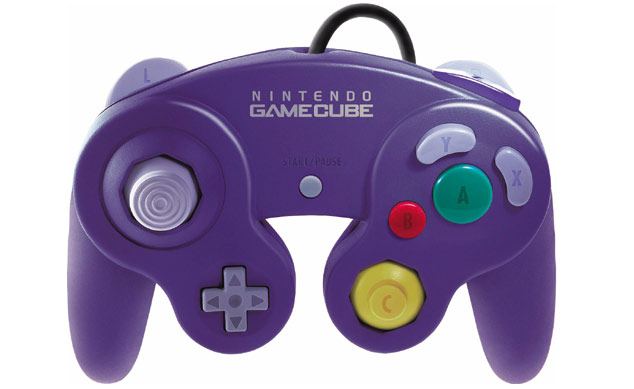
In 2001, the Gamecube hit and it was Nintendo's chance to make up for the mistakes it made with the N64. When you first see the controller you notice that it looks like a fisher price toy. It is very colorful with many buttons in many different sizes. The colours do not really matter though it is the functionality of the controller that does. The Gamecube controller was basically the N64 controller done right. The Z trigger was moved to the top right shoulder. The L and R buttons were now triggers with more depth than any controller on the market. Because the L and R triggers had so much depth to them designers could use their pressure sensitivity so that the deeper the button was pressed it would change the action on the screen (for example some games used the triggers as a zoom lens for a sniper rifle. The more the trigger was pressed, the closer the zoom). The face buttons were strange shapes and sizes but it was an attempt to make them more comfortable and easier to read with just using your fingers. The main action button was bigger making it easier to find. Overall, it ended up being an unneeded change since players were comfortable with the traditional button setup. The best change was the N64 C buttons being turned into a second analog stick which made 3D games even more involving.
Game types - The Gamecube suffered from a lack of support from developers. While the controller probably had nothing to do with it, it was clear that most game genres just played better on the Xbox or the Playstation 2. However when Nintendo made games, they really took advantage of thecontroller and used its unique design to create really unique games. "Super Smash Bros Melee" was a fighting/party game and it could only be pulled off using the Gamecube controller (even the new wii version is best played by plugging in a gamecube controller).
Xbox
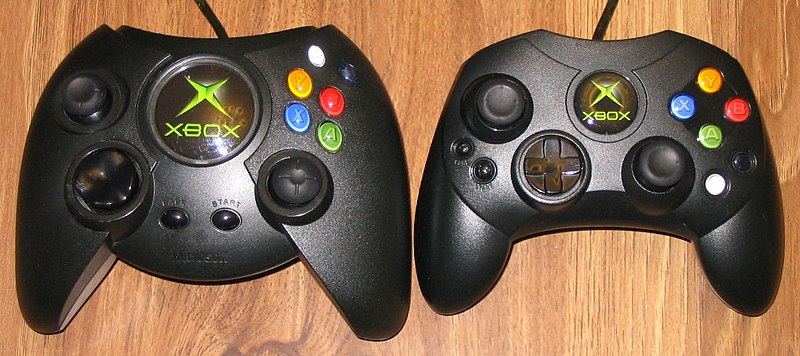
The Xbox also hit the market in 2001 and with it came a massive controller. The first thing that players noticed was the size of the controller and it was a problem. Even big handed individuals (like myself) found the controller too big to be comfortable. Since players were used to smaller controllers it was too much of a change. It made some right moves by having the 2 analog sticks in staggered locations to make room for comfortably using the face buttons. However, the face buttons had a problem, namely the black and white buttons. The A, B, X, and Y buttons were fine and were in the same positions as gamers were used to. The black and white buttons were placed up high in a hard to get to place while still using the rest of the face buttons. Also the black and White buttons were far too small which stood out on the massive controller. The L and R shoulder buttons were triggers much like the dreamcast controller and they were perfect. The Xbox and the Gamecube together made sure that triggers were standard making the Playstation's shoulder buttons seem a little stiff in comparison. Pictured below are both controllers side by side. You can see how much bigger and boxier the controller on the left is, and how much of an improvement the controller on the right is.
In 2002 the Xbox hit Japan and with it came new controllers. These controllers were smaller in order to fit into Japanese gamers hands. It was quickly found that these smaller controllers were superior to the American controllers and became standard worldwide. The black and white buttons were now in a different position as well and they were still awkward to use.
Game types - The Xbox was made by Microsoft so it was almost like a console/PC hybrid. Because of this it brought the most popular PC genre, the First Person Shooter, home. The N64 might have done it first but the xbox perfected how to put an FPS on a console and its controller was almost perfect for them. The Playstation 2 and the Gamecube just couldn't produce the same quality of FPS and 3rd person shooters as the Xbox could.
Xbox 360
Coming out in 2005 the Xbox 360 was an instant hit, and the controller was part of its success. Many gaming publications and websites mentioned how improved the controller was and it is now one of the best controllers on the market. The changes made from the original Xbox controller were simple but effective. The controller remained small and was much smoother and less boxy, so it was very comfortable to hold. The triggers remained and the black and white buttons became bumpers placed in front of the triggers. It basically made the 360 controller an improved Playstation Dual Shock. One thing that really set it apart from what came before was the big Xbox button in the middle. This button functioned much like a menu button on a DVD remote letting the player switch back to the Xbox 360 Operating system and use its features. For example if the 360 has music already on the harddrive the Xbox button could be used to navigate to a custom soundtrack and have the players own music play over the game. It brought up the customization aspect that is very prevalent in today's games. It is a button that has become standard on all controllers since.
Game types - Much like the xbox, the 360 also has a great deal of first person shooters and 3rd person shooters. However, every genre seems to work great when mapped onto the 360 controller. Recently developers have even tried bringing in complicated RTS games (which many thought impossible without a mouse and keyboard) and successfully mapping the controls to the 360.
Playstation 3
Released in 2006, the Playstation 3 Sixaxis controller copied key features from the 360 and the not yet released (by only a handful of days) Nintendo Wii. It had a Playstation button that functioned the same as the Xbox button. It also had some motion control like the Wii. The Playstation's motion control is limited but it does add a little over the typical controller. By tilting the controller you can control the action on the screen. This Sixaxis controller has been used to do everything from drive cars, to lob grenades. Many players do not like the Sixaxis controls and feel that developers added in the feature as an afterthought. It works best when it is optional or is only used for simple tasks. The other change to the Playstation 3 controller was turning the R2 and L2 buttons into triggers, which was a welcome addition. In 2007, the Dual Shock 3 came out which looks exactly the same as the Sixaxis but had added force feedback (which every other controller had).
Game types - The Playstation 3 controller is similiar enough to the 360 that their game types are very similiar. The only difference is that the Playstation 3 allows for motion controls. This worked great in action games like "Uncharted" allowing for better aiming of grenades. But the game "Lair" which only had motion control was a failure both commercially and critically because it is too hard to control everything by twisting the controller.
Wii
The final controller discussed is by far the most different controller and the biggest change to gameplay since the NES. In 2006, Nintendo launched the Wii with an odd looking controller. It focused a lot more on motion controls than action buttons. Alone the controller only has 6 buttons and a d-pad (and only 2-4 buttons can be used at once comfortably), and when attached with the nunchuck it has an extra analog stick and 2 more buttons. The controller can be held either horizontally or vertically depending on the game allowing for many different control sets between games. Alone, looking at just the buttons, it is a pretty awkward and useless controller that is a giant step backward from its predecessors. But, with the motion controls it really is a revolutionary design choice. Games can tell how far the controller is away from the screen as well has how it is positioned. This has led to a wide variety of designers trying to make use of its unique features (and usually failing). Regardless of whether designers are getting it right the Wii has been such a hit based on the motion controls alone. It currently outsells both the 360 and the PS3.
Game types - Because it is such a radically different controller, it has attracted a strange number of new game types. The most common game being the mini-game collection (a series of small activities that use the motion controls). Sometimes the motion controls really pull off unique games, like "Zack and Wiki" and can be precise enough to offer amazing first person controls, like "Metroid Prime 3" or the "medal of Honor" series. Overall the Wii controller is full of potential but it does not seem to be fullfilling it yet.
This game may have come out in 1995 (94 in Japan) but I played through it for the first time just this last month. I had heard how great the game is from many people and decided to try it out for this blog. I am glad I did because even though this game is 15 years old it is just as fresh as any game out today. In fact it has some elements in it that the RPG genre has yet to catch up on. Even though my expectations were high coming into this game they were still blown away. I had more fun playing this game than many games that came out this year. Many games, especially in the RPG genre, are stuck using the same cliches over and over again. Shigesato Itoi, creator of the game, made a point to throw out everything that is typically expected of an RPG only keeping the bare essentials. He made a completely unique game that is without an equal. It is without a doubt a piece of video game art.
The Game World
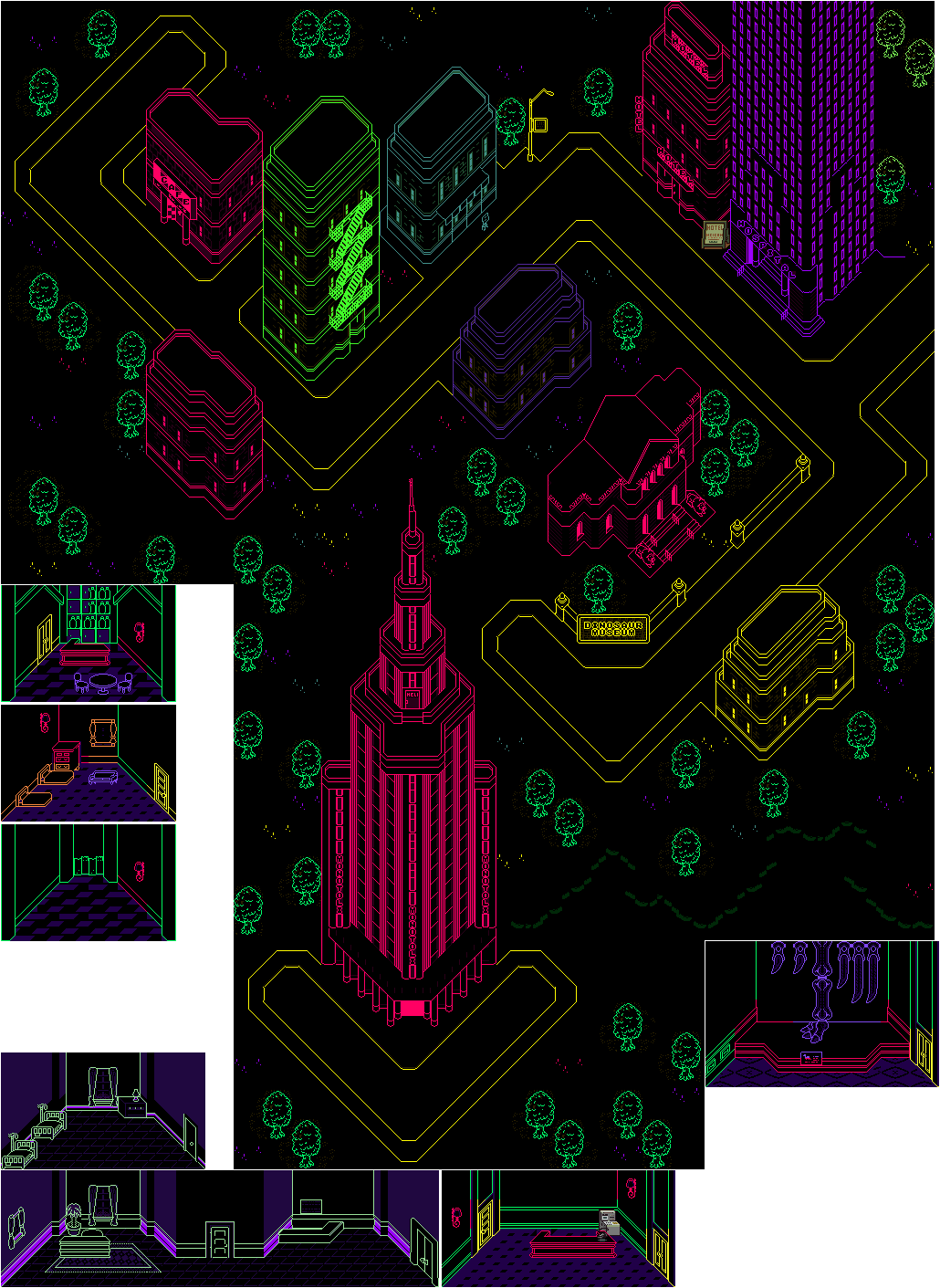
A typical RPG is either set in a fantasy realm, full of castles and dragons, or a futuristic world, full of cyber-punk imagery and post apocolyptic worlds. Earthbound is set in 90s America and the game world spans across some small towns, a large city, deserts, and forrests. The game also has a psychadelic side to it bringing out a dinosaur land, a world done completely with neon lights on a black background, a Chinese Kingdom, and even alien fortresses. It is a strange mix of locals but it works in the players favour, you are always experiencing something new and the change from one location to another is actually done smoothly.
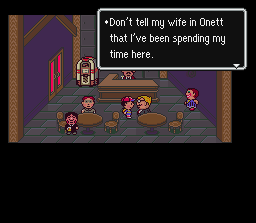
Onett - The town you start off in. A typical little American town.
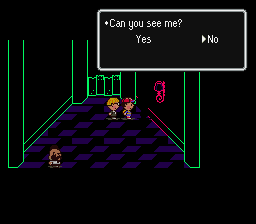
Moonside is on the other end of the spectrum. The colour scheme and art direction does a complete 180 from what the player is used to. But it is a welcome surprise and adds to the charm the game has.
Characters and Plot
What brings all the strange places together is the journey of the characters of the game. The game starts off with a meteor crash in which Ness (the lead character) is given the responsibility to defeat an evil being know as Giygas. He has to travel far and wide to find spiritual locations to unite himself with the earth. Ness is not just chosen at random, he has psychic abilities that allow him to manipulate objects around him. But Ness is vunerable in other ways that the typical RPG hero is not. Since the game spans such a great distance from Ness' original starting point, he can get homesick. If you do not call your mother on a regular basis he will become upset and begin to fail in battles. It is touches like this that humanizes the lead hero, and reminds the player that he is just a boy who is taking on something bigger than himself whether he has powers or not. He also relies on his father heavily throughout the game. Much like many children, Ness' father is constantly away at work and the only way to reach him is by phone. The father is soley responsible for saving the game when needed and putting money into Ness' bank account (the only way you get money). This again humanizes the experience since many people do have a parent who is constantly away from home but only does so in order to support the family. Even though the father is never visible, without him you could not beat the game.
The four main characters are in the center of this screenshot. They are Ness (red cap), Jeff (glasses), Paula (the girl), and Poo (Wearing white and stragne hair).
Throughout the game, 3 other characters join you; Paula, Jeff, and Poo. Paula is a lot like Ness in the way that she has the same abilities. You rescue her early in the game and she quickly becomes a valuable member. Jeff is a boy genious who helps along a lot of the Sci-Fi aspects of the game. He has no abilities like Ness, Paula, or Poo but can use a wide array of machines. Because he plays differently than the other team members he brings some welcome change to the gameplay. Poo is a Chinese prince. He has some of the abilities that Paula and Ness do but to a lesser extent. He is out on a spiritual mission as well, and helps ground the game in its psychadelic atmosphere.
Enemies
The enemies in the game even have a completely different look than most RPGs. You will find yourself fighting everything from wild animals to aliens to zombies to new age retro hippies. Every place has its own unique cast of characters and with it brings new enemies.
Dali's Clock. An obvious nod to Salvador Dali.
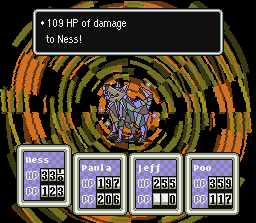
A battle against a new age retro hippie. One of the more bizarre enemies in the game.
The typical RPG (back then and even today) involves a lead hero leading a cast of characters on a journey. Throughout the game they encounter many enemies and defeat them to gain money, items, and experience. These battle are usually random encounters (you can't see the enemy on the screen, you are just walking and suddenly sent to battle). Earthbound kept the fun aspect of the RPG genre, collecting items and leveling up your characters, but removed the random encounters. It seems like a no brainer to have the enemies on the screen but Earthbound was one of the first games to do it. This allowed you to see what enemies were coming up and you could avoid them or prepare ahead. It was a simple change like this that made the game much more accessible and less frustrating. Another thing that typical RPGs have is the inability to avoid needless fights. If your character is at a high level but you have to cross a field filled with weak enemies you will be wasting your time fighting them off taking up game time and the player's time. But in Earthbound this is fixed, by simply having the enemies recognize that you are a higher level than them. No longer do they run towards you in battle but run away making them easier to avoid. If you do happen to accidently bump into a weak enemy the battle is completely skipped and a screen flashes telling you you've won. These are very basic changes but it goes to show that the developers didn't just work with big ideas but also took time to think about the little things that make the game experience better.
Power of Prayer
A short but important part of the game and its message is Paula's Pray command. In battle Paula can pray which sometimes leads to your party being healed or some other positive status effect. It could damage your party, or it can have a negative status effect on your enemies. Either way it is a risky move to make and you can safely go through the game without ever praying. It should only be used as a last ditch effort if you are dying and have no items or PP points (what you use to cast healing and other magical attacks). It is an interesting addition to have your party pray for their own success while at the same time the player is praying that it will work, it is an appropriately named command. However if you are well prepared throughout the game you may never need to use it, that is until the last battle. Once you are coming to the end of the battle with the final boss your attacks are meaningless. The only way to defeat him is to pray. While you pray all the people you met throughout the game start to pray with you leading you to an eventual victory. It is not through violence that you beat the game but through the power of prayer. Its a powerful message that has a passive solution to a voilent enemy, it also shows you how much you connected to the characters around you throughout the game.
A sample of the last battle in Earthbound. You can see how prayer works in this battle. Also notice how the boss has some strange dialogue. This text was taken directly from an experience the lead designer had when he accidently saw a rape scene in a movie. It frightened him as a child and decided to use the dialogue to represent the ultimate evil in the game.
Western Culture
Earthbound can be seen as a giant love letter to western culture. The designers of the game are all Japanese and only have a fleeting interpretation of life in the west the same way most westerners think of life in Japan. It is an interesting look at how they view our pop-culture. Earthbound could have dipped too far into plagerism, but instead they sprinkled references throughout creating a homage and not a copy.
One set of reccuring characters are the Runaway Five (part of the joke is that there are actually six members in the group). The two lead singers are complete homages to the Blues Brothers (Dan Ackroyd and John Belushi). In fact, the characters look so similiar that they had to change their clothes slightly for the American release in order to avoid copy-right infringment. Like the Blues Brothers they are constantly in trouble (in the game they are always in debt that they can't pay off) and Ness has to find a way to help them out in order to move on in the game. You can even watch them perform a bluesy song if you buy a ticket to their concert.
Starman is on the box for the game as well as a regular enemy.
The Diamond Dog is a boss in Earthbound.
There are many references to western music (more will be talked about in the music section) but there are three instances where songs take a phsyical form. One of the references is to the Beatles "Yellow Submarine." In the game you are in need of a submarine for transportation and finally get to a yellow submarine. There is a little joke sign next to it saying "The yellow color is a coincidence." The movie "Yellow Submarine" is a psycadelic journey of the four Beatles, making it a great tool for the psychadelic journey of the four lead characters of Earthbound. The other song titles that comes to life are both David Bowie songs. "Starman" is a famous Bowie song and also a main enemy in the game. "Diamond Dogs" is another David Bowie hit and a boss in the game is called Diamond Dog.
You can see how Aloysius Minch is a sleazy character.
One of the lead antagonists in the game is Pokey; a greedy little kid the same age as Ness. Pokey's father is also an evil character named "Aloysius Minch." This is a play on "Atticus Finch" the father figure in To Kill a Mocking Bird. Aloysius Minch is a twisted evil version of that character.
There are many more references to western culture but one of my personal favourites is the Mr. T character. All the towns in Earthbound are alive with many residents walking about and one of them looks exactly like Mr. T. This cannot be a coincedence
Music
Original Music
The music in the game also is influenced by western music and culture but first I am going to go through what I felt were the best pieces of original music in the game. The music in Earthbound is powerful when it needs to be, fun and light during the city exploration, and psycadelic when the game takes a turn into the odd and bizarre.
ONETT MUSIC
Onett is the first town you go to and has one of the most basic scores for the game. Its light, fun, and kind of sounds like something you would hear in a cartoon. It's the perfect music to welcome the player into the game.
POLESTAR
My personal favourite song in the entire game. It starts off light and easy but takes a turn into a more heavy and chilling atmosphere. You first hear it when you visit Polestar Pre-School. The light aspect of the song blends with the environment of children at the preschool. However, one of the children has been kidnapped which makes the darker turn of the music make sense. You can feel that this once happy place has had a turn for the worst. Once you rescue Paula (the girl who was kidnapped) the music in this area changes back to a light hearted song permanently.
Coffee Cup
My other favourite song in the game is when you are drinking coffee. You have 2 instances where this can happen in the game. You can take a drink of coffee and reflect on how much you progressed through the game. During the song, text scrolls on the screen against a psycadelic background. It is probably one of the strangest songs in the game but it matches the way the game feels at this point. The first time you drink coffee is in Saturn Village, which is a strange place inhabited by odd looking creatures. The second time you drink coffee is in a cave where you have recently taught the creatures to not be so shy and believe in themselves.
Western Remixes
A good deal of the music is not completely original but remixes of classic western music. I won't put all the references here since it would take too long to go through all of them, but here are some of my favourites.
Belch Factory
Pink Floyd is one of my favourite bands, and it's in Belch Factory they are sampled. The intro to the Belch Factory score mimicks the intro to "Welcome To The Machine" by Pink Floyd.
FLYING TIME
There are pionts in the game that you are flying in the Skyrunner (an obvious nod to Skywalker from Star Wars). While you are flying, a remix of the intro from " We Won't Get Fooled Again" by The Who.
Naming Screen
One of the most frantic songs in the game is at the naming screen. The song is actually a sample of the Monty Python theme song played at different speeds. Listen closely you might not catch it at first.
Earthbound is a great game with so many layers to it. Not only is the game fun to play but it is obvious that the designers took a lot of time and effort giving the game a unique feel that is completely unmatched in any game. When Earthbound hit North America is was actually a failure since RPGs were not as popular at the time and the direction of the game was so radically different from what people were used to. In many ways it was too far ahead of its time and only now are some developers catching up.
This is a continutation of this post. Now I am going to look at how controllers changed throughout the 90s to today. You'll see that the NES controller basically continues it dominance as the best way to interact with games and as all the popular consoles at this time were basically upgrades of the NES model.
Super Nintendo (SNES)
In 1990, Nintendo finally came out with a new system, and with it a better controller. Early systems (namely the Intellivision and Colecovision) had many buttons on the controller but they were placed in such a way it was very difficult to take full advantage of them. This is why the NES controller and later the Sega Genesis controller were such hits, they had minimal buttons and all were easy to use. The SNES had four buttons that could be reached with the right thumb. Since games were becoming more complex it was difficult to map a game on just 2 to 3 buttons and these 4 buttons gave developers a lot more action to play with. Furthermore fighting games were becoming more popular in the early 90s and controllers needed at least 6 buttons to mimick the arcade. Nintendo knew that 6 buttons all located for the right thumb would be too much to handle. So the additional two buttons were placed on top of the controller. It felt natural to hold the controller with a thumb on the d-pad a thumb over the A,B,X,Y buttons and the pointer fingers resting on top of the controller against the L and R buttons. Now the player could quickly locate and use 6 buttons and fully control the directional pad with no issues. It lead to faster and more complex games. The player now had the tools to move the artform forward.
Game Types - With more buttons on the controller and all of them being very easy to access games got even more complex and fast. The SNES could handle all the genres that the Genisis and the NES had but with an added layer of gameplay. This controller also allowed fighting games to be successfully ported over to the console. "Street Fighter 2" being an example of what the console and the controller could handle.
Sega Genesis (6 button)
Pictured left is the old controller and on the right is the new 6 button controller.
In 1993 many games were being mapped to the Super Nintendo's 6 button layout making them difficult to convert over to the Genesis. Sega had to create a new controller to keep up with game design. So they added 3 new buttons to the controller. Rather than copying the SNES and placing 2 of the buttons on top of the controller, they placed all 6 buttons for the right thumb. The controls were managable but not as easy to use as the Super Nintendo. The 6 buttons covered too much space and it was difficult to use all of them effectively. It was a step in the right direction and cemented the fact that games now needed 6 buttons, but the controller was a little too awkward.
Game types - The original Genisis controller could handle many genres but was not so good at fighting games. Fighting games on the SNES had better controls soley because it had the number of buttons needed for the arcade port. The 6 button Genisis controller allowed the consoles library to open itself to more games.
Sega Saturn
Not much is to be said about the first Sega Saturn controller. It copied the 6 button Genesis controller but it had shoulder buttons, like the SNES, as well. But the hardware itself was a bit too clunky and the buttons felt stiff. It was hated by most gamers and the Sega Saturn was a failure in the marketplace. Sure there were many factors that led to the Saturn's problems but the controller didn't help. It just goes to show that if a controller is uncomfortable and not well liked it is hard to get people to use it and developers to create games for it. The Sega Saturn was also rushed to market in 1994 and this controller is proof that more time could have been spent polishing.
In 1996, Sega released a new controller featuring an analog stick. While the stick was a welcome change (and an answer to the N64 controller mentioned below) it suffered from being way too big and awkward to hold. The circular controller fit in no ones hands properly. The other thing it got right was the new shoulder triggers. Rather than a pair of stiff buttons on top of the controller it had triggers. These triggers were much easier to use and had depth to them mimicking a gun trigger. It was a simple and welcome change but sadly it did not become standard on all controllers until much later.
Game types - The Saturn was never ment to be a 3D machine and was marketed as more as the ultimate 2D game console. This also showed in the controller which worked fine for 2D games but fell apart for 3D games. The 3D games that did succeed on the Saturn, usually limited the controls. In the case of the remarkable "panzer Dragoon" games they were made on rail shooters thus not having as much 3D movement. When the newer 3D controller came out it allowed for more 3D control but it was a little to late since the Saturn was almost on the way out.
Playstation (original controller)
Coming out just a month later than the Saturn in Japan the Playstation knew exactly what to do right. The system was originally going to be a Super Nintendo CD add-on and it shows with the controller. The Playstation controller was a simple upgrade to the SNES one (if it is not broke don't fix it). All that was added was grips to hold it more comfortably and two extra shoulder buttons, now giving the player 8 action buttons to work with. Since this remote, 8 buttons has become the standard, it is just enough to give the game designers enough to make their games complex while keeping it managable for the player to work with.
Game Types - The Playstation really pushed 3D games and it worked well enough on its first controller. The D-Pad worked but didn't give full 3D movement. 3D games felt a little clunky on the original controller. However the extra shoulder buttons did allow for more complex games in every genre.
Nintendo 64
In 1996, Nintendo tried to reinvent the controller again. They did a lot of things right but also quite a few things wrong. The main addition to the controller was an analog stick giving the player full 360 degrees of movement. 3D games were becoming the norm and the best way to manipulate a 3D environment is with a controller that lets you move in all directions smoothly. The analog stick worked perfectly and it has become a standard addition to every controller since. Nintendo took steps backward by placing 6 buttons for the right thumb, which was already proven to be too much. The d-pad was still on the controller but it was placed in such a way you could not use the d-pad and the analog stick at the same time (which was needed for some games, one set of controls to move another set of controls for the camera). 4 of the buttons on the right side became the new camera buttons but they cannot mimic the precision that the d-pad would have had. Also turning 4 buttons into camera buttons ment that now only 4 buttons could be used for action. It also had the weird placement of 3 shoulder buttons (on on the left shoulder, one on the right shoulder, and one in the middle). Even though there were 3 buttons you could only comfortably use 2 at the same time thus restricting the player. It was a revolutionary controller that changed the way game designers created games in some ways but also a lesson on what not to do for others.
There is one addition to the N64 controller that came out in 1997. The Rumble Pack allowed the controller to have force feedback. You could literally feel the action in the game through the controller. It was an immediate success and developers loved it. It is one of the biggest advances in bringing the player into the game world to date.
Game types - With the analog stick the N64 execelled at one thing above the Playstation, 3D platformers. The N64 controller just handled a 3D environment so much better then any other console when it came out. But the limited buttons and the akward placement did not allow for as complex games as the Playstation had, and fighting games were few and far between and controlled horribly.The controller was created specifically to control "Super Mario 64" so it worked best with games that were similiar to it. It also pulled off first person shooters successfully but still not as great as it the PC could.
Dual Shock
Coming out in late 1997 in Japan, the Dual Shock was Sony's answer to the Nintendo 64 controller (The Dual Analog came out a bit before but it was the Dual Shock that was the true final product. Because the Nintendo 64 controller had an analoge stick it was far easier for game designers to create better 3d platformers and first person shooters. The Dual Shock trumped the N64 controller by having two analog sticks (which is now standard on almost all controllers) which allowed for much more precision in a 3D landscape and tighter controls. It achieved such prefection that the later playstation 2 and 3 controllers were barely changed (The Playstation 2 controller had such a small amount of change it won't be mentioned later in the blog). The Dual Shock also had rumble inside the controller which made games much more realistic and cemented the fact that all games needed rumble support from now on. It became the new standard replacing the SNES controller as the blueprint that all game companies design their games and hardware from.
Game Types - Once the dual shock came out the Playstaion became the king of 3D control. It could do everything the N64 controller could and more since it had better button placement and more buttons. Once this controller became standard complex 3D games started to become the norm.
Dreamcast controller Released on 9/9/99 the Dreamcast controller was matched with a great system but the controller itself had many flaws. Unlike the Playstation controller, the Dreamcast only had two shoulder buttons (that were thankfully triggers). This brought the number of action buttons that designers had to work with down. It also only had one analog stick which was another step back since game designers have already proven the two analog sticks are needed for many action games. It also was rather big and a little awkward to hold. The other major flaw was that the D-pad was placed too far down and was awkward to use.
Its big claim to fame was the VMU unit in the middle of the controller that promised adding a new layer of gameplay. It was a small little extra memory card/controller/game that allowed the designers to put extra content on the VMU. For example in the Sonic games the VMU became a home to a virtual pet you could take care of. It could have been a lot more but because of the Dreamcast's short life span it never came to full realization.
Game types: As I said before the Dreamcast controller was a step back from the Dual Shock. However, it was not such a disaster like the N64 controller and it could still handle many genres well. The 2K sports games played particularly well on the Dreamcast and "Soul Calibur" was one of the best fighting games out at the time and it controlled perfectly.
About a year and a half ago The Orange Box came out. Even though it contained the successful Half Life 2 and the two episododic sequels, it wasthe game Portal (which was bundled in the package) that really caught everyone's attention. At its core it was a puzzle game but the level of polish, charm, and humour is where everything really shined.
Blue and Orange
The Puzzle aspect of Portal is where the actual gameplay lays. Without it no amount of clever writing could make the game playable. Luckily the puzzle aspect of the game was unique, fresh, and revolutionary. Puzzles comprised of going into a room and figuring your way out of it. You had a gun which shot orange and blue portals. Go through a blue portal and you come out the orange portal, and vice versa. Like any good puzzle game it has a simple premise that can be used in a variety of ways to make it more complex and flexible. Since Portal was a new game with a new puzzle the game designers designed the rooms in such a way that each one got just a little bit more complicated. The learning curve in a game is one of the hardest things to master and all designers should really look at Portal as a great example of how to do it right. When games start off too hard many players give up and become frustrated, but if a game is too easy for too long the player becomes bored. Its a hard task to design a game that ramps up the difficulty just fast enough to accommodate almost everyone. Portal was never overbearing and with enough practice anyone could complete the game. This wasn't becasue the game was too easy but because it was designed in such a way to constantly improve the players abilities in a seemless way. One of the best ways to understand art is to learn to appreciate it, and the designers of Portal did a fantastic job on keeping the player in the know.
Short and Sweet
Game length is one of the ongoing debates within the gaming community. Some people demand long epic games, and become frustrated when a game isn't more than at least 12 hours. Others get bored when a game refuses to end after playing for 20+ hours. My personal feelings are that a game should last as long as the designers vision warrents it. Portal clocks in at about 3-5 hours (depending on how well you adapt to the puzzles) on the first play through. It is the most focused 3-5 hours of gaming anyone could ask for. Because the game is short and focused it never has a chance to let the player down. On the other hand, you would expect since the game is so fun that the player would be disappointed when it ends, however this is not the case. Portal is a puzzle game and even the best puzzle games would get a little repetitive if dragged out for too long. Of course after beating the game you are excited to see what the developers of the game will bring in their next game but you do not feel cheated. The other thing that the short length brings is the ability to beat the game in a single sitting (or two). Many games take a long time to beat and by the end of the game you have forgotten what happened at the start of it. You can take everything the game has to offer in a short period of time which makes it all that much more powerful and memorable. Portal is the perfect length for the game it is supposed to be.
The Lab
The art direction in Portal is also another stand out feature. At first glance of any screenshot the game looks very sterile. This overly white and clean look to the start of the game adds to the mystery in the atmosphere. You wake up as a test subject and really have no clue what your character is doing in the lab. The white walls have a contrasting effect, both looking calming to the player (since there is no sensory overload) and at the same time confusing (since it still looks very sterile and odd). Throughout the rooms you see slightly frosted glass up near the cieling and you can somewhat see an office space. These little things stand out against the white walls since any change in colour or art will immediately catch the player's eye.
A little bit later in the game once you have become completely comfortable with the controls and puzzle aspect, the environment changes. You go from white sterile labs to dark run down back rooms. The art direction changes when the player escapes the lab tests. The later levels stand out even more because it is such a contrast to what came before it.
The Cake is a Lie
The one thing that no one expected from a puzzle game was a good story. Typically a puzzle game doesn't need a story since they are rewarding enough on their own as a mind teaser. But the designers went above and beyond what they needed to do and made sure that not only that Portal had a great stroy but a humorous one. Creating a good video game story line is hard enough as it is, but creating one that is funny is even harder. Video games have never been known for getting players to laugh, it is much easier to create action and stress then pull off comedy. The comedy in Portal would be categorized under "black comedy" or "dark humour" which is described as (by dictionary.com):
the juxtaposition of morbid and farcical elements (in writing or drama) to give a disturbing effect
As stated before, Portal starts off with the player in a lab not knowing how they got there or what they are doing there. It seems like they are running tests that revolve around portal technology. This scenario seems more like the set up for a horror story then a comedy but that is what makes it a dark comedy. GLaDOS (a robotic voice that gives you your instructions) is constantly promising you cake after completing the tests. Furthermore she taunts you in many rooms even saying how impossible the room is or that you might end up dead soon. Alone these lines are not funny but when delievered through a robotic voice they have comedic timing and tone to them. When you finally get to the cake you learn that it is a lie. The cake is there but it is across a pit of fire that will kill you. It is at this point the player realizes that GLaDOS has taken over the lab and you may be the only survivor. Having the cake as bait to lure the player to their death gives that Wily Coyote vs Road Runner aspect to the game. GLaDOS is Wily with all her traps and technology and the player is the Road Runner with all the smarts and wit.
An example of GLaDOS wit through monotone.
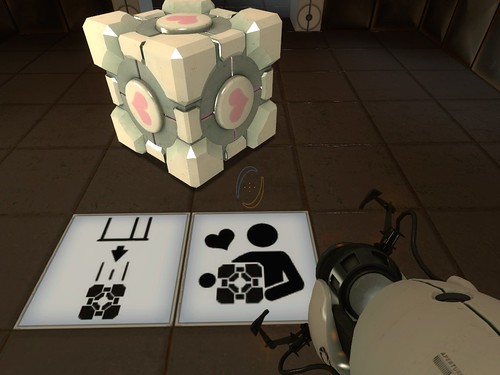
One room in particular has you using a companion cube. Many rooms have the player picking up cubes and placing them on buttons to solve puzzles, but this cube is different. GLaDOS instructs you to love and care for this cube and keep it with you. It even has some hearts painted on the cube. This whole idea is silly but the player cannot help but get a little attached to it. The cube does help you get through most of the level and you are pretty happy with yourself and the cube for solving the puzzles.
However, in order to leave the level you have to burn the cube, effectively killing it. GLaDOS taunts you saying that you killed the cube faster than any other test subject making the player seem heartless. It may be silly but it is dark humour at its best. You laugh at the fact that you are growing attached to a silly metal box and then get a little upset when you effectively have to put down your only friend. The companion cube would not stand out so much if it wasn't for the fact that you meet no people throughout the game. All you have is yourself and GLaDOS (who is mean spirited and trying to kill you). The little companion cube with a heart painted on it is the biggest personality in the game that you interact with. It is a ridiculous scenario and one that really exemplifies what dark comedy can achieve.
Finally you have the story that is told through the writting on the wall. You see this from time to time when you have a chance to get out of the lab tests. You can see previous scribbles left from old test subjects. They warn you that the cake is a lie and that the place is more dangerous than you may expect. This part is actually a little creepy which helps bring out the humorous parts of the game more. By having this dark and creepy part of the game the humour stands out in contrast.
Music
The music throughout the game is mostly dark and mysterious. It has a lingering effect on the player and almost goes unnoticed just enhancing the players mood. It is very subtle which works to the games advantage since the game has a very sterile and lonely feel to it. Too much noise would hurt the mood. Also the eerie sounds help bring out the humour a little more and twist it into dark humour.
Notice how the score of the game is very subtle and adds to the eerie atmosphere.
The music in the game that got the most attention was the song that comes at the end of the game. This song was such a success that it became downloadable on iTunes and a song to play on Rock Band. The song reinforces the humourous aspect of the game. It is sung by GLaDOS and she is taunting the player letting them know that this game was just a trial and everything went to plan. Even though you supposedly killed GLaDOS in the final battle/puzzle she is singing away telling you it all went to her plan. It is a nice twist on the final scare that usually happens in horror movies (where the monster or killer comes back at the very end for a quick scare nodding towards a sequel). Rather than having the quick scare or just a scene of GLaDOS coming back to life, she sings a fun little song. The best way to appreciate it is to play through the game so you can see how it is a nice capper to the whole experience. I will end my blog the same way. Please listen and enjoy Still Alive, written by Jonathan Coulton.
One of the best endings to any game. Its dark humor at its best, the evil robot who has been trying to kill you the entire game comes back to taunt you in a sweet little song.






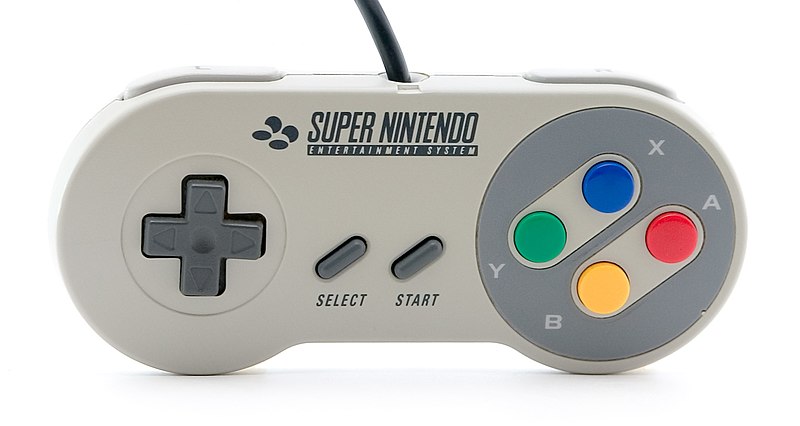 In 1990, Nintendo finally came out with a new system, and with it a better controller. Early systems (namely the Intellivision and Colecovision) had many buttons on the controller but they were placed in such a way it was very difficult to take full advantage of them. This is why the NES controller and later the Sega Genesis controller were such hits, they had minimal buttons and all were easy to use. The SNES had four buttons that could be reached with the right thumb. Since games were becoming more complex it was difficult to map a game on just 2 to 3 buttons and these 4 buttons gave developers a lot more action to play with. Furthermore fighting games were becoming more popular in the early 90s and controllers needed at least 6 buttons to mimick the arcade. Nintendo knew that 6 buttons all located for the right thumb would be too much to handle. So the additional two buttons were placed on top of the controller. It felt natural to hold the controller with a thumb on the d-pad a thumb over the A,B,X,Y buttons and the pointer fingers resting on top of the controller against the L and R buttons. Now the player could quickly locate and use 6 buttons and fully control the directional pad with no issues. It lead to faster and more complex games. The player now had the tools to move the artform forward.
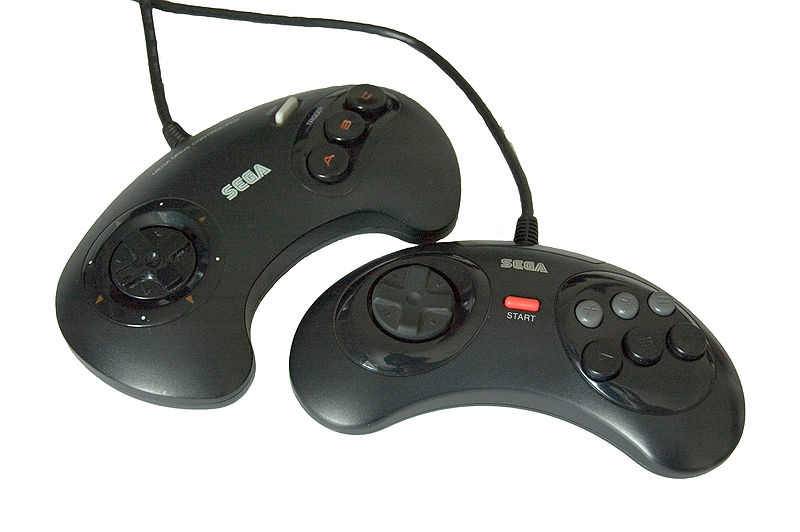 Pictured left is the old controller and on the right is the new 6 button controller.